

Two weeks ago, I told Zmist & Copy writers they can't use AI to write their first drafts (and shared this decision in this newsletter).
Today, I’ll tell you how I built a process around self-editing first drafts and where our writers are allowed (and encouraged) to use AI.
In today's newsletter:
For years, every draft at Zmist & Copy went through me before it reached a client. Often, even after our editor had approved it, I'd still give it another read.
But as I started focusing more on building strategies, reporting results and managing clients, I had to accept that I can't review every single draft anymore.
It made me think about what makes someone's work impeccable.
I believe a big part of it comes down to ownership. When you take responsibility for a piece of work from brief to delivery, you approach it differently. You don't just write something, send it to the editor, incorporate their feedback, and consider your job done. You question everything, including the brief, and look for ways to make the final result better.
That's the mindset I want to encourage at Zmist & Copy. It doesn't mean I suddenly decided writers don't need any feedback. I think every writer has to feel accountable for the quality and outcome of their work.
So here is what I did to encourage that attitude.
A while ago I wrote about Content Quality Score and the six dimensions I believe every piece of content should be evaluated against.
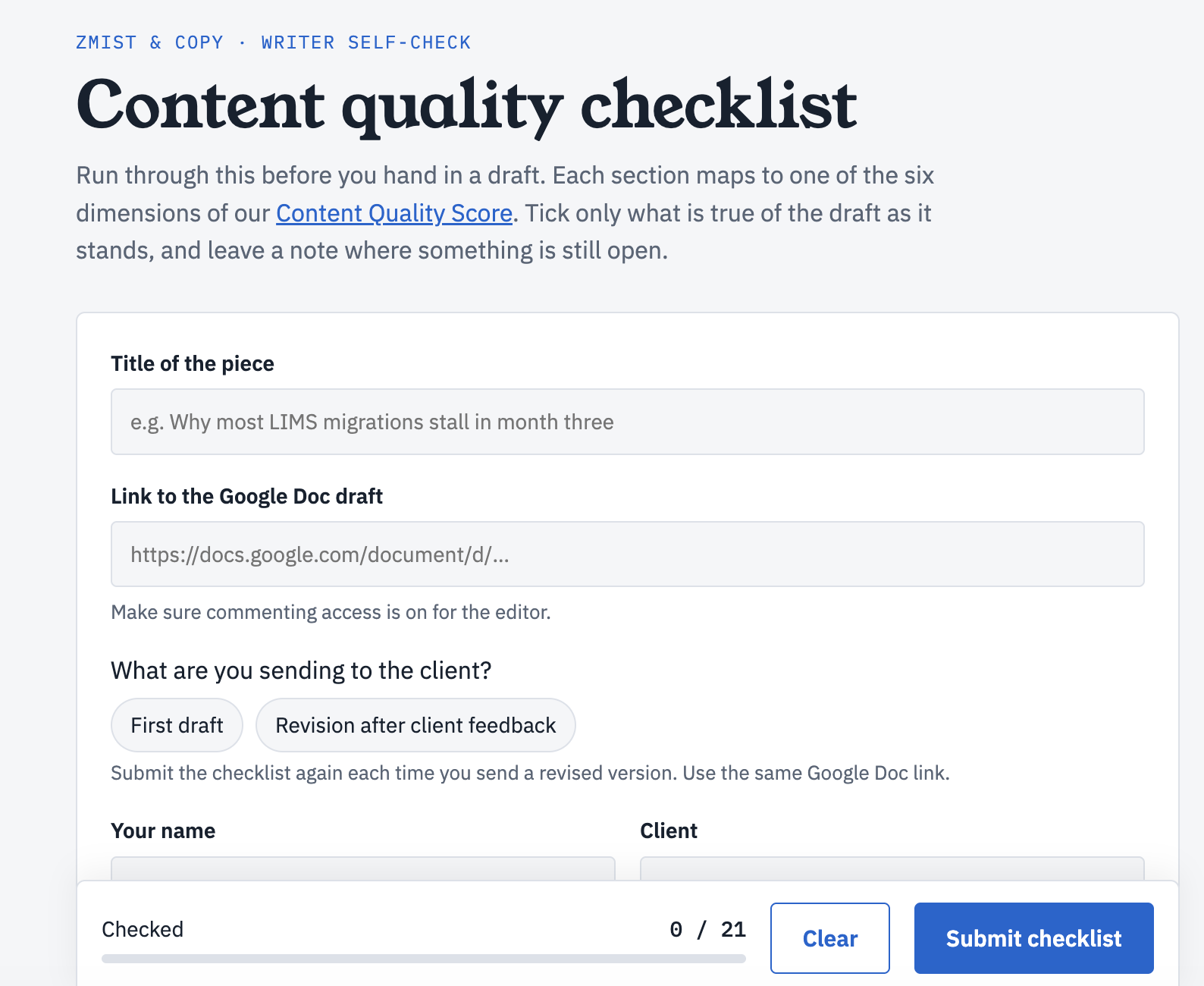
I turned that framework into a checklist deployed as a web app that writers have to complete before submitting a draft. They paste in the article title and Google Doc link, then go through every item and confirm that the piece meets the standard.
Every submission is logged in Airtable, organised by writer and month. That means I can see who submitted what and when, without chasing anyone for updates.
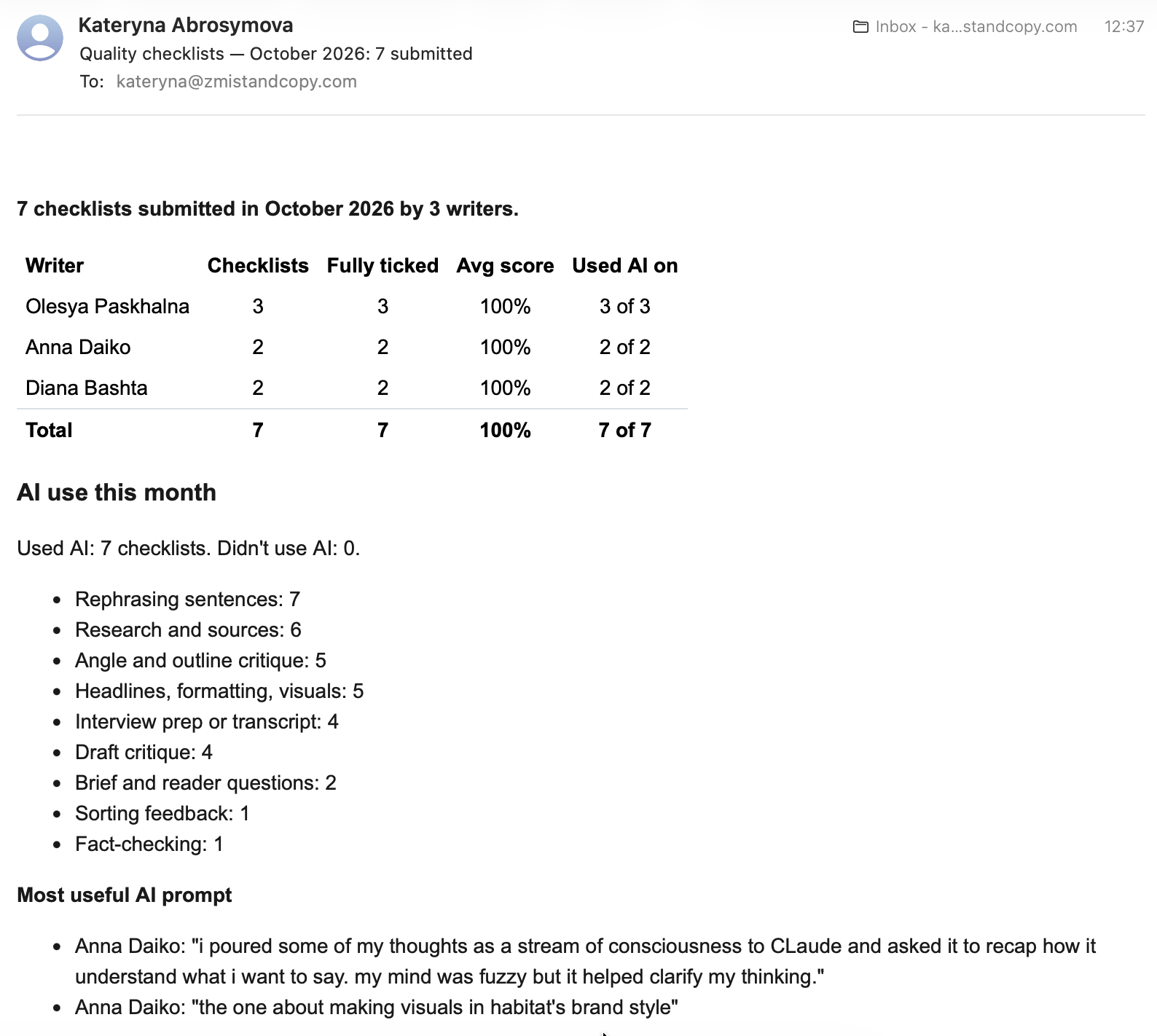
On the last day of each month, I get an automated email showing how many quality checks each writer completed and how they used AI along the way.
By the 10th of each month, every writer receives a private report card.
It brings together three things:
That last part is particularly important. We track keyword rankings, leads generated, and whether AI search engines are citing the pages.
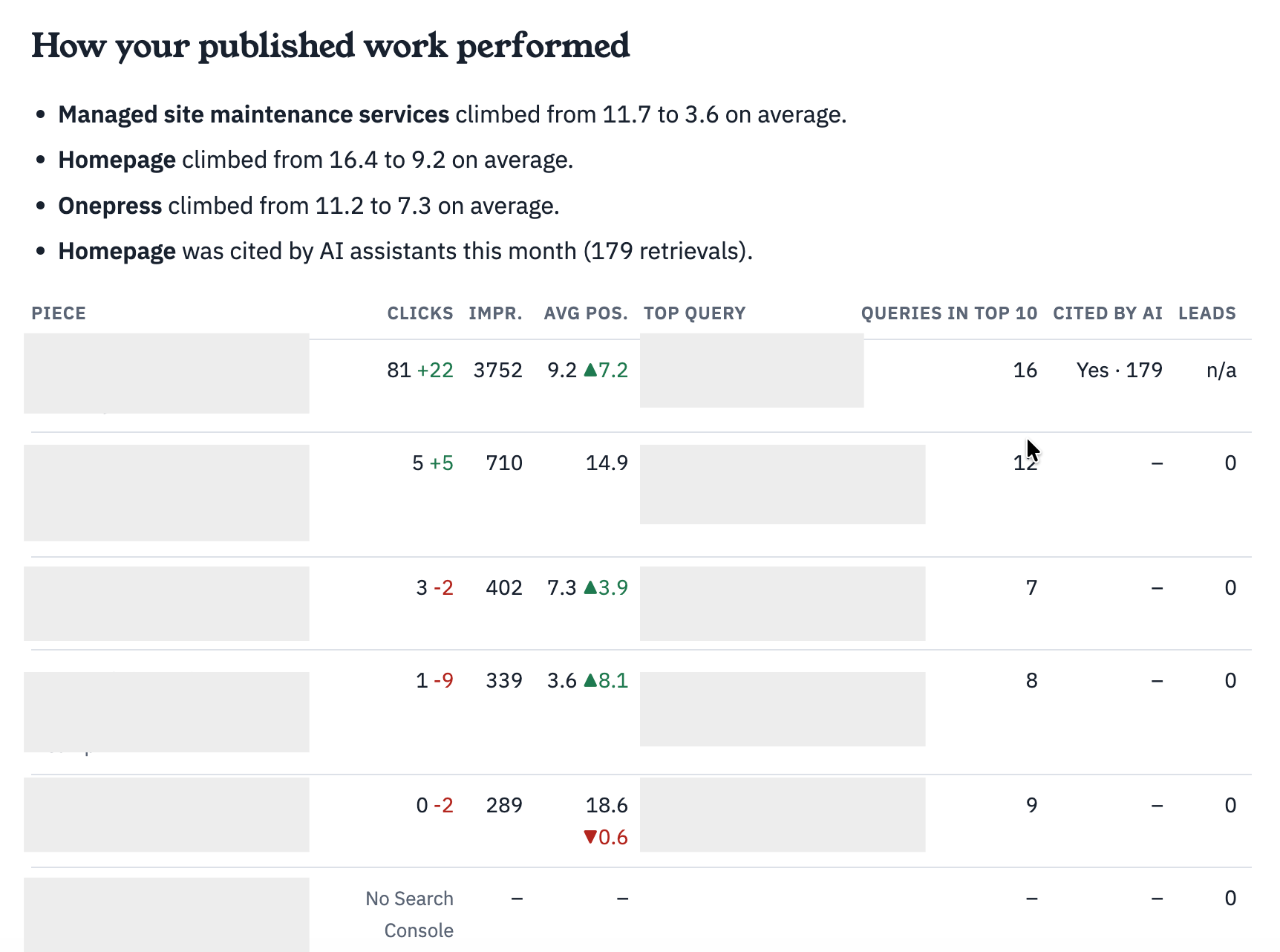
When writers see the results that their work produced, they feel more motivated.
The checklist also links to our internal AI playbook, which I decided to make available as a downloadable guide.
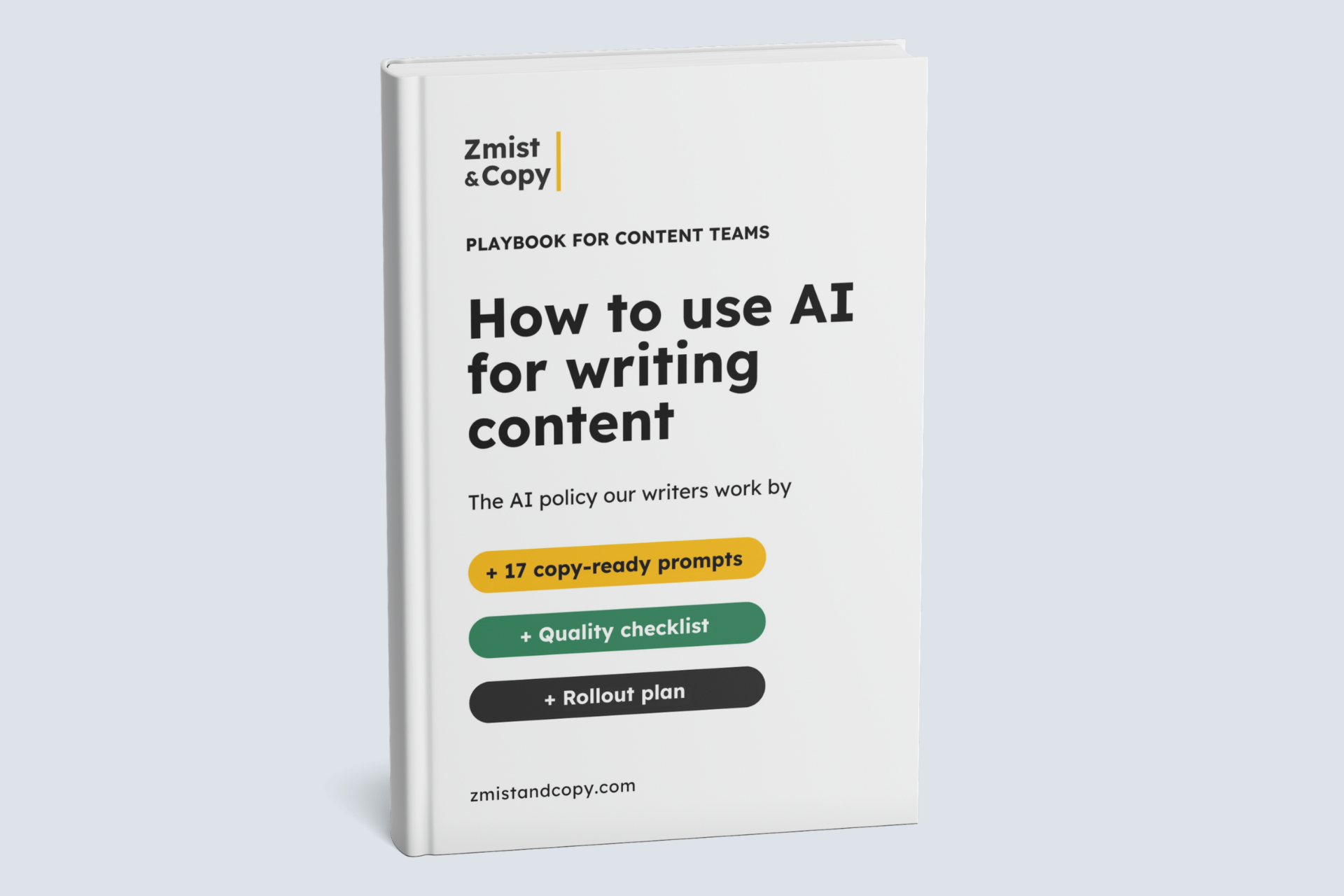
It's a practical policy for using AI throughout the content production process without outsourcing the thinking that makes the work valuable.
The guide follows a piece from brief to final edit and explains what AI can and can't do at each stage. It includes 17 copy-ready prompts for research, questioning the brief, preparing expert interviews, challenging an argument, reviewing a finished draft, improving phrasing and fact-checking.
I posted some of these prompts on LinkedIn this week.
It also includes our content quality checklist and a suggested rollout plan for introducing the policy to your content team.
You can download the AI playbook we use at Zmist & Copy for your team. It's free to download and adapt to your own workflow.
If your team has a process or policy for maintaining content quality, I'd love to see it.
Kate
P.S. Hire Zmist & Copy to build content strategy and create assets that help you become visible on LLMs, and attract qualified leads.
P.P.S. If we aren't connected already, follow me on LinkedIn and Instagram. If you like this newsletter, please refer your friends.


In content marketing, the last thing you want to do is waste your time producing content that doesn't bring any results. In this blog post, I'll show you how to apply McKinsey's problem-solving technique to explore the problems in your content strategy so that you can stop wasting time on stuff that doesn't work.

Every content marketer eventually faces a choice: build the machine, or write the message it sends.
Subscribe to From Reads to Leads for real-life stories, marketing wisdom, and career advice delivered to your inbox every Friday.


