
.png)
As an agency owner, every new client feels like starting a new job. The clock starts immediately. No honeymoon period. No "getting up to speed."
Same goes for you if you just got hired as Head of Marketing or Content.
Do you know what most newly hired marketing leaders do first?
Redesign the website.
I get it. You want to put your stamp on something visible. Build the foundation right. Show everyone you're serious about brand and messaging.
But website redesigns take 6 months just to launch. Add another 3 months to see meaningful changes. That's 9 months before you can point to results.
You don't have 9 months.
You have 90 days to prove you deserve the job.
In today's newsletter:
The first week on the job is for detective work. Dig into analytics. Set up proper tracking if it doesn't exist.
You might find that one old webinar from 2022 still drives 20% of SQLs. Or that the "failed" email campaign actually had the lowest cost per acquisition.
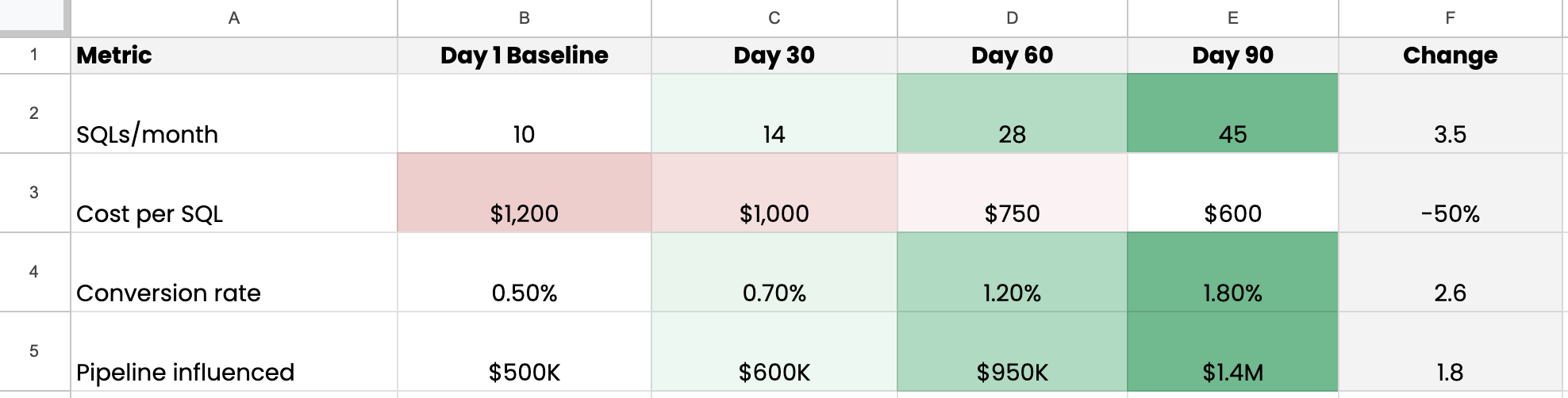
Document everything. Conversion rate. Cost per lead. SQLs per month. Pipeline influenced. Close rate. Whatever metrics the CEO asks about in meetings.
Put them in a spreadsheet. This is your "before" picture. You'll need it when they ask you about results a few weeks later.
Now you need to optimize what already exists and working.
Check your blog posts. I guarantee half have no CTAs. Fix those first.
More examples of quick wins:
Document what you changed and when. Take screenshots of before/after.
By optimizing what's already working, you can easily prove your competence without asking for budget or new roles on your team.
By day 30, you've earned enough credibility to propose something bigger.
But don't just pitch your favorite tactic. Use opportunity-solution mapping to connect problems to solutions.
Maybe you've identified that competitors dominate organic search, but nobody's touching YouTube. Or everyone's fighting over the same enterprise accounts while mid-market is wide open.
Pick one major opportunity. Just one. Map out exactly how you'll use it.
Those quick wins from days 8-30? They bought you a permission to take a swing.
This is where you show the numbers that make the CEO care about keeping you.
By day 90, you need one slide that shows: "This metric was here when I started. Now it's here.”
Two things. Taking too long to show impact. And focusing on activity over results. Let's talk a bit about each.
Marketing isn't like other departments.
The CMO who leads with a 6-month website project is already planning their exit interview. The CEO sees expense with zero return.
"We published 12 blog posts this month!"
Nobody cares.
How many leads or customers did this influence?
Activity feels safe. You can always do an activity. But "we've been really busy" won't save your job. Especially in the first 90 days.
Create this on day 1. Update it weekly. Present it on day 90.
Add a second table showing what you did:
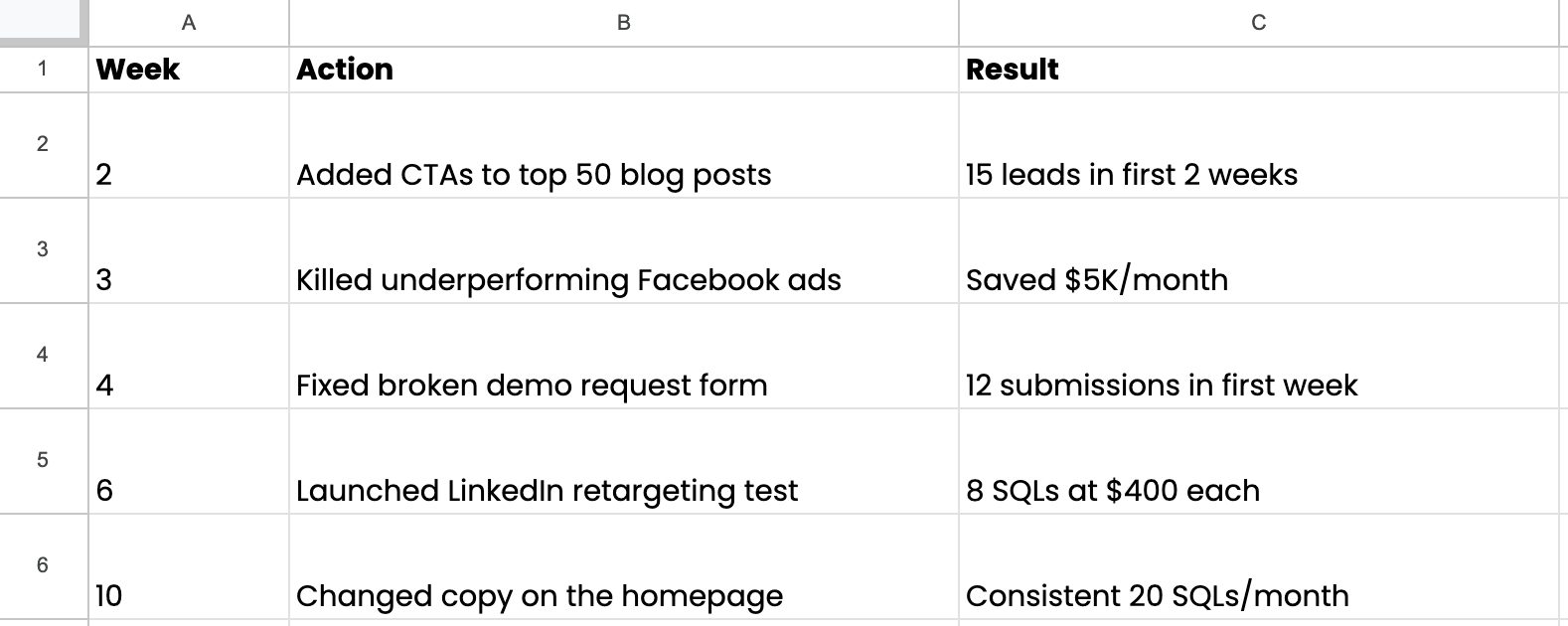
When someone asks what you've accomplished, you pull up this spreadsheet. Numbers on the left were before you. Numbers on the right are now. Proof that hiring you was the right call.
I can't wait for the holidays. Next week will be about my New Year resolution. And then I'll take a couple of weeks off. You?
Kateryna
P.S. If we aren't connected already, follow me on LinkedIn and Instagram. If you like this newsletter, please refer your friends.
P.P.S. Need help with quality content? Zmistify your content with Zmist & Copy



If so, why do one-third of AI cited pages have no organic visibility?

When features beat benefits and how to nail your message.
Subscribe to From Reads to Leads for real-life stories, marketing wisdom, and career advice delivered to your inbox every Friday.


