

It was the end of 2023 and I had some important news to share with my team.
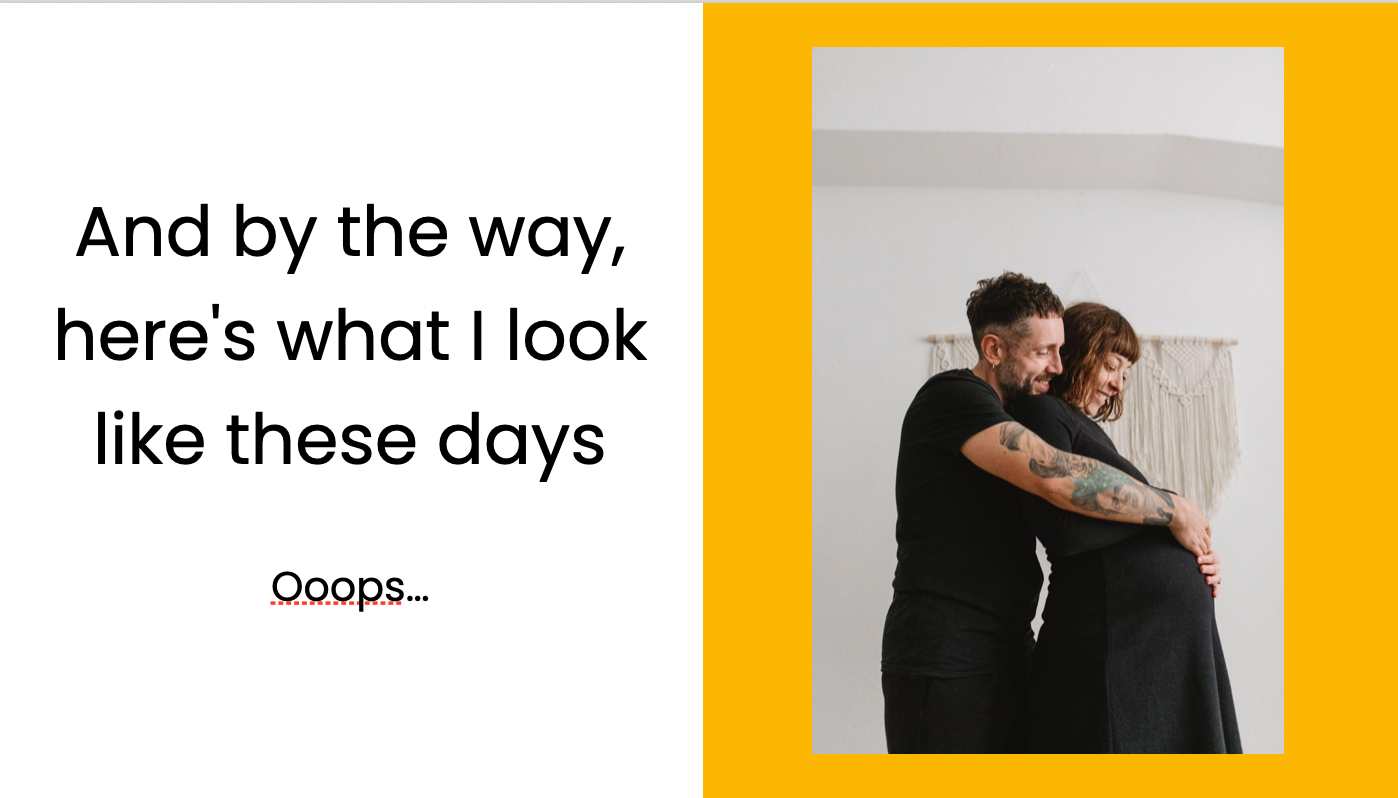
First, I was 8 months pregnant with my first baby and since I hadn't been through this before, I had no idea what to expect and how long I’d be away (and if I'd be away).
Second, my team was about to start working for a new company. We were no longer going to be Kaiiax.
Let's just say things with my previous business partner hadn't worked out. It was time for a fresh start, and I wanted to build something that was entirely my own. (I know, being 8 months pregnant is the perfect timing).
So I told the team we were starting again, with a slightly different focus and a totally different brand.
We were going to concentrate on content because that was what we were particularly good at. Four years later, I'm rethinking that focus.
In today's newsletter:
At Kaiiax, our business was about building content marketing departments inside our clients' companies. We recruited and managed writers, built strategies, ran content operations, and SEO. But we didn't produce much content ourselves.
With Zmist & Copy, I wanted to own the entire process, without having to manage anyone on the client's side. I made content our main offer.
Starting from scratch meant losing the brand recognition we'd built under my previous company. I'd lost several clients along the way. And as if that wasn't enough, I was also figuring out this whole motherhood thing.
Still, my new business direction felt like the right decision.
We worked on positioning, built content strategies, interviewed subject matter experts, developed editorial plans, produced content, managed operations, and measured performance. Essentially, we became our clients' content marketing team.
Our work produced results. Clients gained visibility in Google and AI search and generated inbound leads.
But there was always something that bothered me.
We'd still get requests from clients who wanted us to just produce content.
And even when they were getting the strategy and all the thinking that went into deciding what to create, I sometimes felt like they saw those things as extras. Nice to have, perhaps, but not what they were paying for.
That's when I decided to change our pricing model. Instead of selling content piece by piece, I packaged our services into a fixed-price monthly Content Program. It was a step forward, but not much changed. Clients were still buying content.
I guess changing the pricing model doesn't necessarily change how clients perceive the value of what they're buying. They were still buying content, in a new packaging.
We didn't communicate our value proposition properly.
I don't think the market has fully figured out what it means for our industry yet. There's the obvious problem: AI can produce content. And even if AI-generated content is slop, its existence is changing how companies perceive the value of content.
Here is how I think they think about content: "Why would I pay so much for an article? I can use AI to produce the first draft and have someone edit it. That's how I can avoid publishing slop and paying content agencies."
I can't really argue with the economics of that.
If AI can do half the work, the person doing the other half can work faster, so the cost of production decreases. Positioning around content production doesn't seem reasonable.
Plus, I don't see the same demand for content as a standalone service that I used to.
The truth is, even though content was our offer, we were never just delivering content.
We've been building content engines for B2B tech companies, which means we define what to say, who to say it to, what content to create, and how to turn it into leads.
Around the same time, I started looking much more closely at the performance of our work.
I've always been quite obsessed with reporting. But AI has made it possible for me to improve how we collect, process, and analyze data. I've built an automated reporting pipeline, started tracking performance in more detail, and connected the dots between our work and business outcomes.
I can see much more clearly where leads come from and which activities influence visibility.
Something else became obvious. AI search. Organic traffic is becoming less reliable as a measure of visibility. Buyers are using ChatGPT, Perplexity, Claude, and Google AI to research vendors and compare alternatives.
I started hearing clients ask whether their company appears in AI answers. The best thing is, I could answer this question. In fact, we were already getting some fantastic results. Our existing clients were gaining visibility in AI search and, more importantly, generating leads from ChatGPT.
I had to admit that the market was telling us something. Also, given how much money I was spending on AI visibility tools, it was about time I listened.
So, I started thinking, what if Zmist & Copy stopped selling content marketing and started selling AI search visibility?
I deliberately say positioning-led. Because one thing I absolutely don't want to do is become another SEO agency that has simply changed its website tagline from SEO to GEO.
I've spent enough years in this industry to have a few opinions about that. I've never particularly liked the way most people in the SEO industry approach marketing. It's often too focused on keywords, search volumes, and technical checklists, while completely ignoring the company's positioning, its market, and what makes it different.
The same agencies that were selling SEO yesterday are selling GEO today. Add some schema markup, llms.txt, throw in some AI-generated articles, in large quantities, and you're ready for AI search.
Don't even get me started on link building.
I have always had a problem with the instrumental approach to links. The idea that you need to acquire a certain number of backlinks nobody clicks within articles nobody reads is just so stupid. Businesses pay thousands to do that, instead of investing that budget in expanding awareness of their companies and reaching more potential buyers.
Why are we still pretending that a link nobody sees is the same thing as building a company's authority?
If we want AI systems to recognize a company as worth mentioning, we need third-party mentions. This is where things get interesting. Because while we've been building the owned-media side of our clients' visibility for years, I now need to build a much stronger earned-media function.
We've already started working on PR. There's a person in the team responsible for it, and we're building the process. But we're still at the beginning, and I wouldn't pretend we've cracked it.
We also need a systematic way to get our clients included in relevant third-party listicles. That's a process that I need to build.
I feel like a beginner again. I have days when I think I'm making a terrible decision.
There are companies that have been doing AEO much longer and better than us. They seem to have everything figured out. And then there's me, trying to rebuild parts of a business while running the existing one, while taking care of a 4 months old and a toddler. (I'm starting to think there's a correlation between giving birth and rebuilding a business).
We're currently working on documenting the results we've achieved with existing clients, developing our AI visibility methodology, and building the earned-media capabilities that will make this a much more complete offering.
There's still a lot to figure out. But perhaps that's the point.
One question before I go:
Are you also feeling this constant discomfort of having to rethink what you do, how you sell it, and what your business should become because of AI?
I'd love to hear from you.
I'll keep you posted about how my decision works out.
Kateryna
P.S. If we aren't connected already, follow me on LinkedIn and Instagram. If you like this newsletter, please refer your friends.


Stuck in the commodity trap? Read this story. It's a blueprint for marketers and business leaders who want to differentiate their organizations. Through a dialogue between a marketer and a business owner, you'll discover four differentiation strategies to help you rethink your approach and stand out.
Subscribe to From Reads to Leads for real-life stories, marketing wisdom, and career advice delivered to your inbox every Friday.


