

"All your people and AI agents working together."
This is what one company has in its hero copy on the homepage. What does it sell?
In today's newsletter:
“Imagine the future,” “We reinvent what's possible,” "Where transformation starts.” None of these messages tells you what the company sells. If the product is unclear, how is the customer supposed to buy it? Yet tech companies keep putting vague copy in their hero sections.
I think there are four reasons:
1. They get inspired by successful companies and think “this is the way.”
2. They know their product too well. They can't get into the head of someone seeing the product for the first time, with zero context, so they skip the part that feels obvious and jump straight to “poetry.”
3. Vague messages feel like a sophisticated choice so they write their own version of "the operating system for modern teams," "where work flows," "intelligence, delivered" and slap themselves on the back. It doesn't matter if the sentence says nothing if it sounds smart.
4. Writing specific copy is hard. It's even harder if you're doing it for your own company (been there, done that). Anyone can write "reimagine how teams work." But how do you say, in one sentence, exactly what you do, who you're for, and why you're better without being confusing or wordy or afraid you're doing it wrong. The resolution for specific copy is clear positioning which many founders don’t have.
It’s easy to see why trying to imitate successful companies is a losing strategy for emerging brands. If you’re focused on customer acquisition, you need to be clear about what you sell and why people need to buy it. You don’t have the privilege of a popular product that can afford to be vague because people already know what that product is.
Yet, I’ve always wondered why big companies choose to be vague. Me writing this newsletter is my way to think this through.
I see two reasons.
Brand means a worldview. As a product, you're "team messaging." As a brand, you can go from “collaboration” to "the future of work” to "bring people together.” The more ambitious you become as a brand, the more you zoom out and the less you're describing the software.
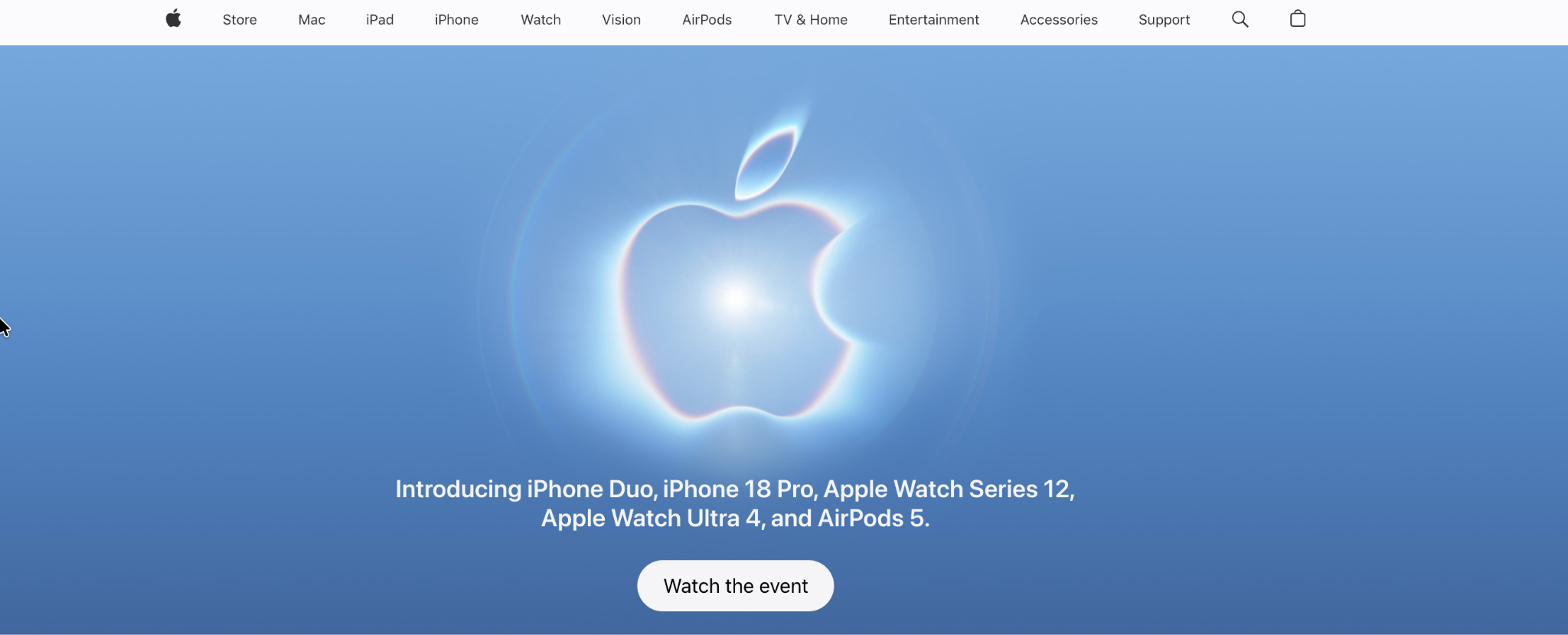
B2C brands do this too. Apple is technology that empowers creative people to challenge the status quo. Red Bull is energy, adventure, pushing human limits.
But you rarely see that brand messaging in their homepage heroes. They use the homepage to sell the product and save the bigger brand idea for creative campaigns.
Imagine Slack's homepage said: “Messaging app for teams.” That becomes limiting once Slack has huddles, canvases, workflows, AI, agents, integrations, enterprise automation.
A broader statement gives the company room to say: “We're not a messaging product. We're the place where work happens.”
This is particularly common for startups going for enterprise customers because they no longer want to sell their tool to an end user. They want to attract the attention of the C-suite with bigger budgets and so they become a platform or an operating layer.
Specific product description can shrink the perceived value. The more abstract you become, the more it feels like there is more to it than just a tool.
Here is an explanation from one company we talked to about their decision to go for abstract messaging:
“Staying purely a tool caps us at ~$200M ARR in a $5–7B SaaS pond with three credible competitors. The transformation play sits in a $140B TAM and unlocks a 5–10x ACV expansion (from $75–180K to $250K–$1M+) by selling into CMOs, product heads, and C-suite alongside researchers. The vaguer claim is the more defensible one in the long run because category creation is harder to copy than feature parity.”
I agree, it's tempting to think “We're no longer selling the tool. We're claiming a space within a bigger category,” or even better – “building our version of what the world should look like.”
Think whatever you want about your vague headline, abstract is not consumer friendly. It's simply not.
Nothing stops you from launching brand marketing campaigns, saying what you stand for or telling what the world needs to look like. You can do all that AND be clear about what you sell in the hero section.
I was reading Eddie Shleyner's book "Very Good Copy” the other night while putting my baby girl to sleep. In one chapter, Eddie cited a copywriter Eugene Schwarts:
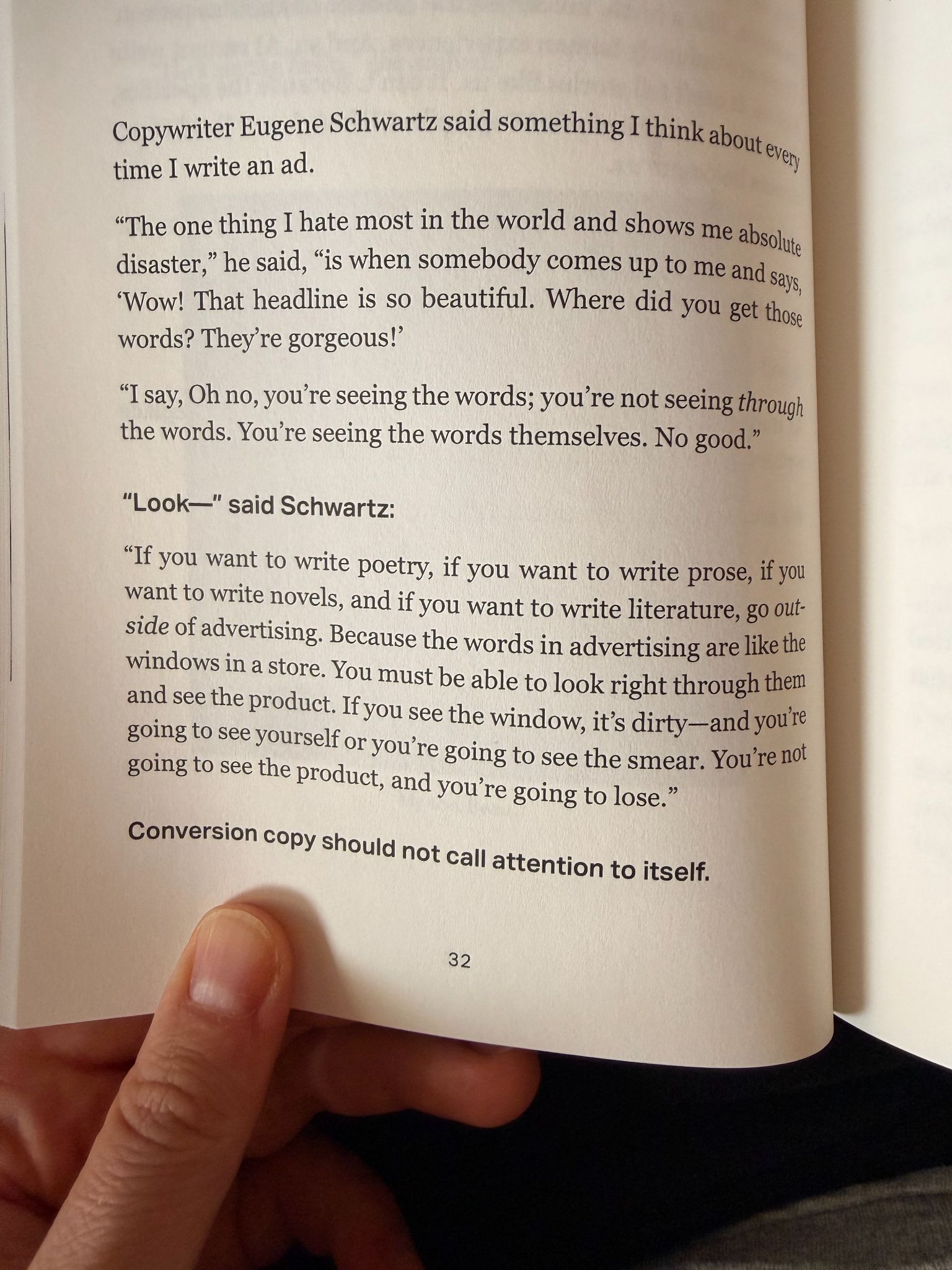
“If you want to write poetry, if you want to write prose, if you want to write novels, and if you want to write literature, go outside the side of advertising. Because the words in advertising are like the windows in a store. You must be able to look right through them and see the product. If you see the window, it’s dirty—and you’re going to see yourself or you’re going to see the smear. You’re not going to see the product, and you’re going to lose.”
Conversion copy should not call attention to itself.
I don't know a company that doesn't want to increase the number of customers. To do that, you need conversion copy. Your homepage hero isn’t the place to be vague.
When someone who has never heard of you lands on your homepage, the hero has to answer three questions:
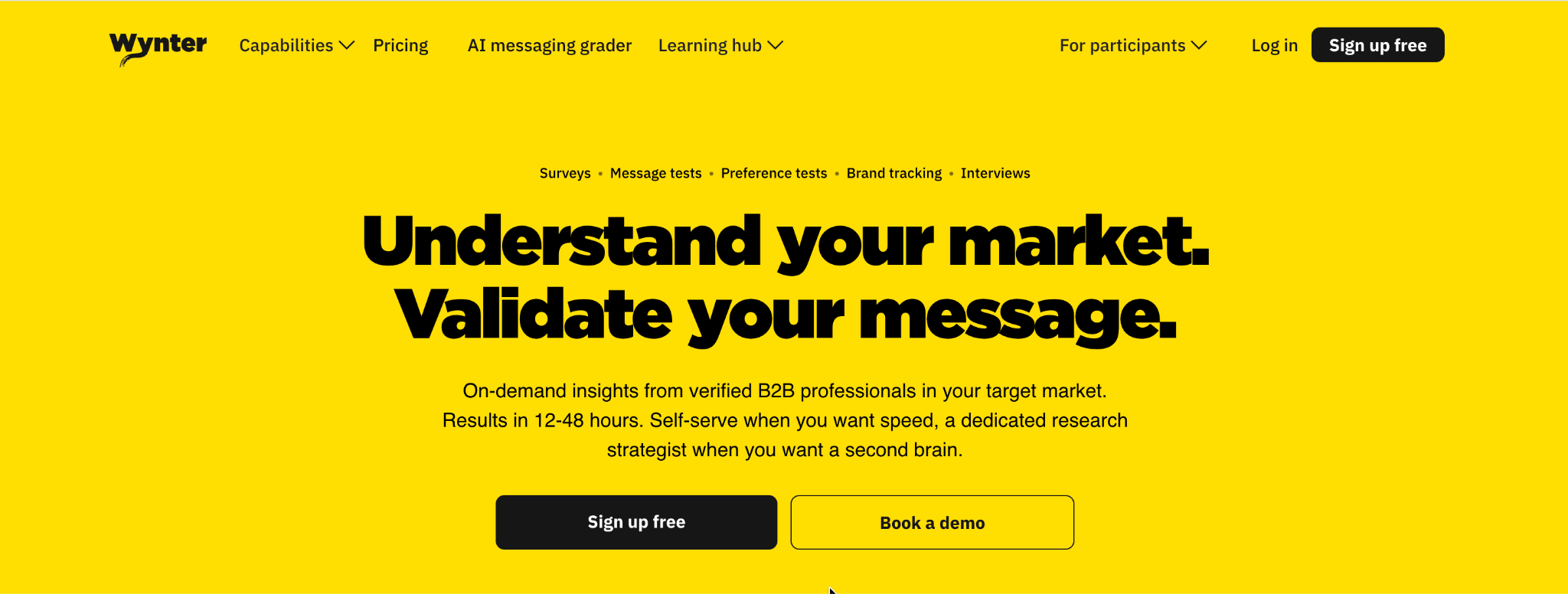
Your CTA needs to match prospect intent (by the way, there is a study arguing two CTAs beat one).
Here are three things the hero should NOT do:
Last time we redesigned our website, our hero said:
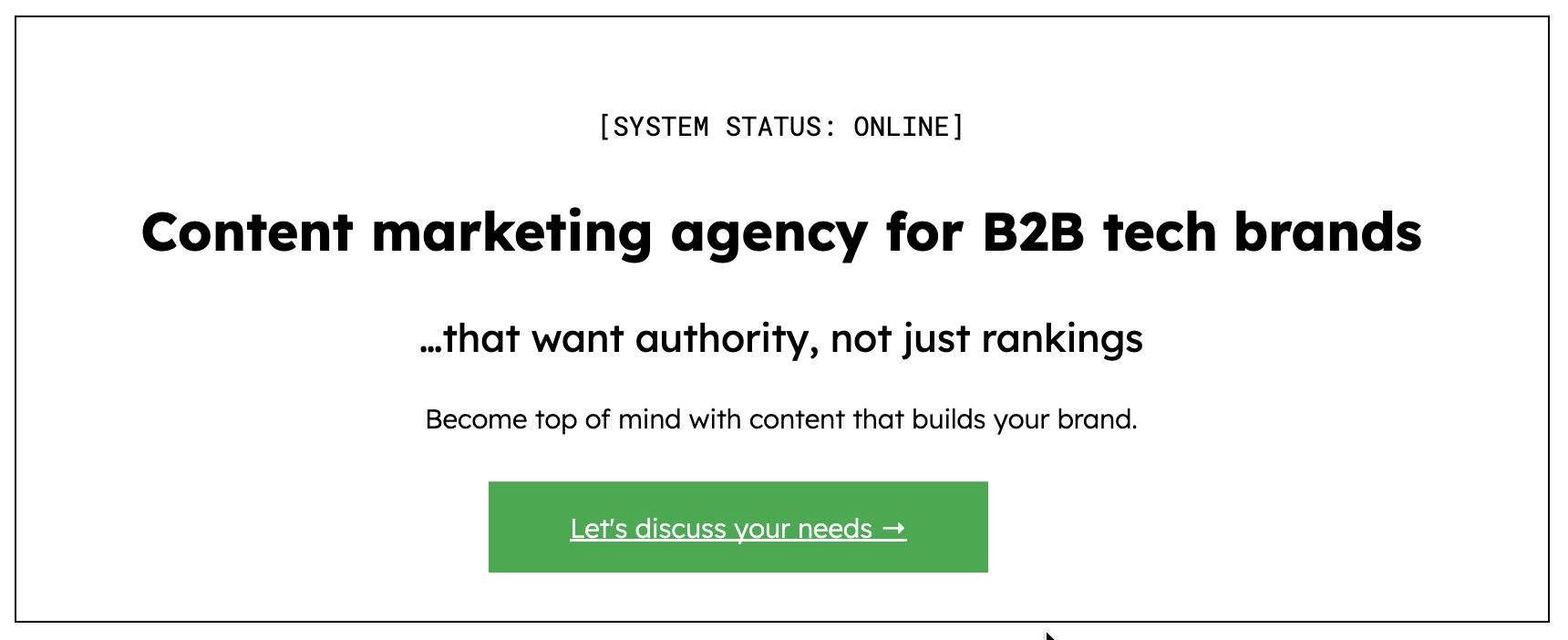
You can tell what category we're in and who we're for. “Authority, not just rankings” sounds like differentiation, but “authority” is vague. It can mean different things to different people.
The biggest problem: what do we actually do? That wasn't clear.
I rewrote this hero like this:
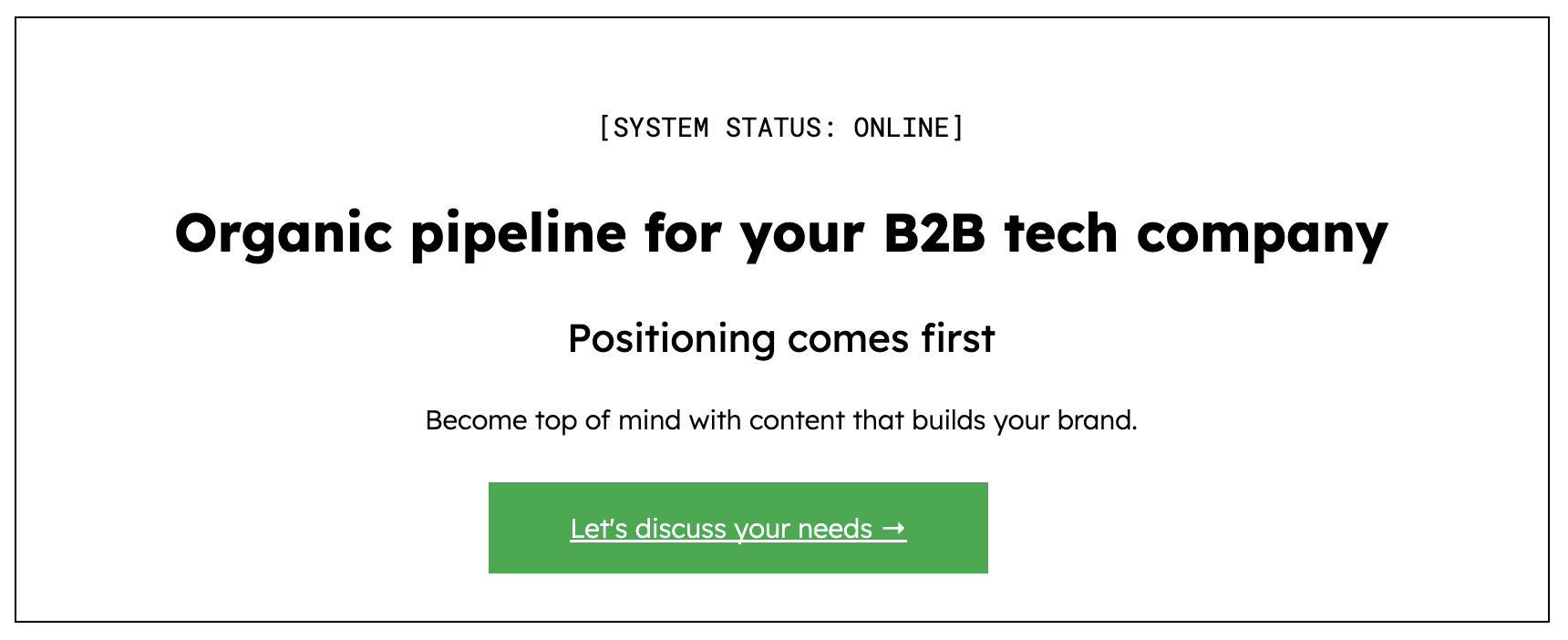
This tells you what we deliver – “organic pipeline” – but that’s marketing jargon. It might be clear to marketers, unclear to business owners. “Positioning comes first” implies a belief, not a service. It tells you how we think, but this doesn't necessarily mean we deliver positioning.
“Become top of mind with content that builds your brand” makes the entire message even more confusing. Do we deliver organic pipeline? Content? Positioning?
Final iteration:
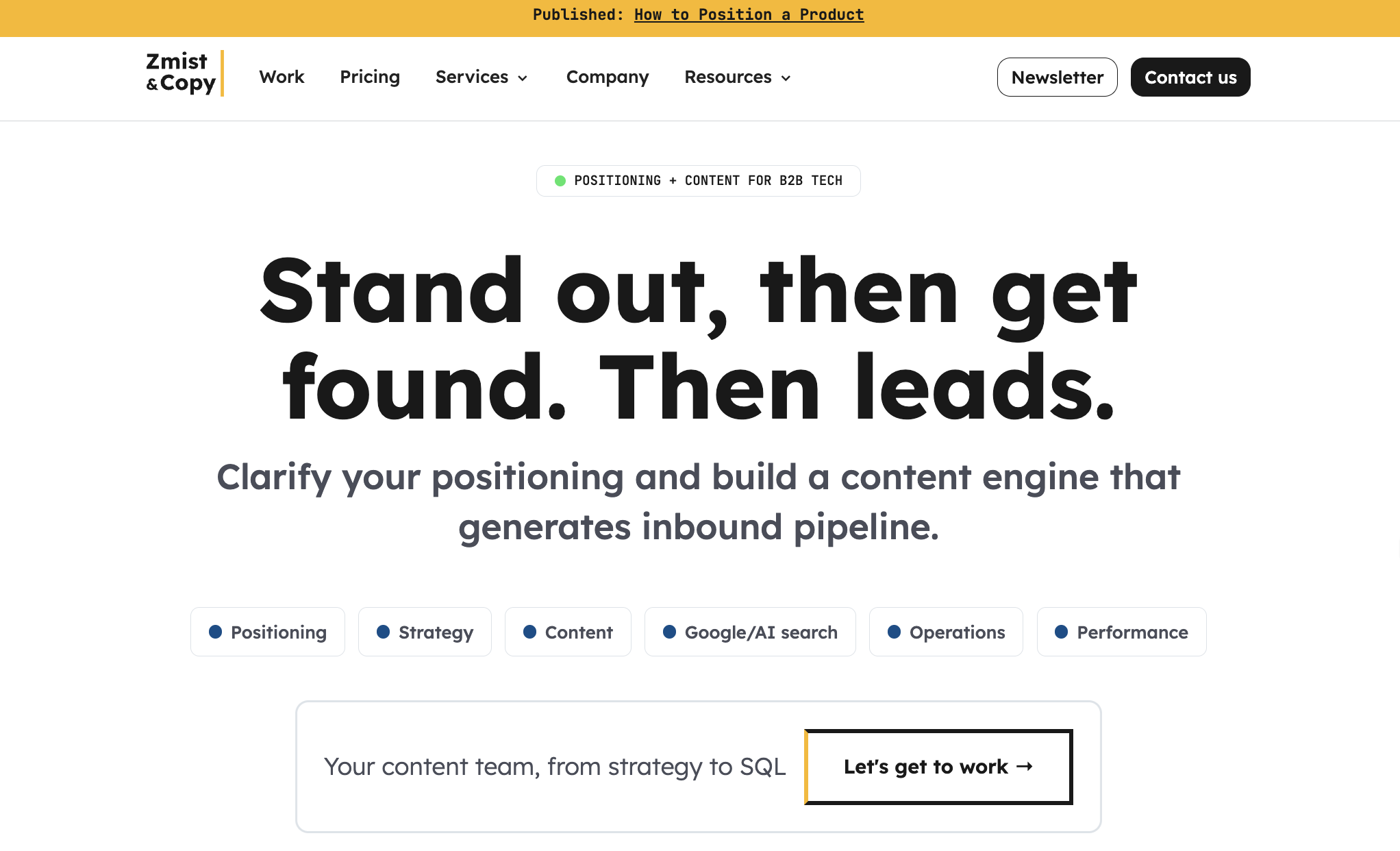
What we do: Positioning + Content
How is it for? B2B tech
Why are we different? We are your content department that makes you stand out, get found, and generate leads.
And we have the how: Positioning, Strategy, Content, Google/AI search, Operations, Performance
Then the CTA supports the promise and matches the action we want the visitor to take: “Your content team, from strategy to leads. Let’s get to work.”
I think this time I nailed it.
Guessed whose tagline this was: "All your people and AI agents working together"?
Slack.
Kateryna
P.S. If we aren't connected already, follow me on LinkedIn and Instagram. If you like this newsletter, please refer your friends.
P.P.S. Need help with quality content? Zmistify your content with Zmist & Copy.




When features beat benefits and how to nail your message.
Subscribe to From Reads to Leads for real-life stories, marketing wisdom, and career advice delivered to your inbox every Friday.


