
.png)
I've been enjoying writing content strategies for clients more than I ever have. I’ve always liked it. But lately, I really love it. What's changed?
In today's newsletter:
Before, when I built a content strategy, I would figure out topics, clusters, content types, the buyer journey, goals, and how it all connects. Then put it together into a content roadmap.
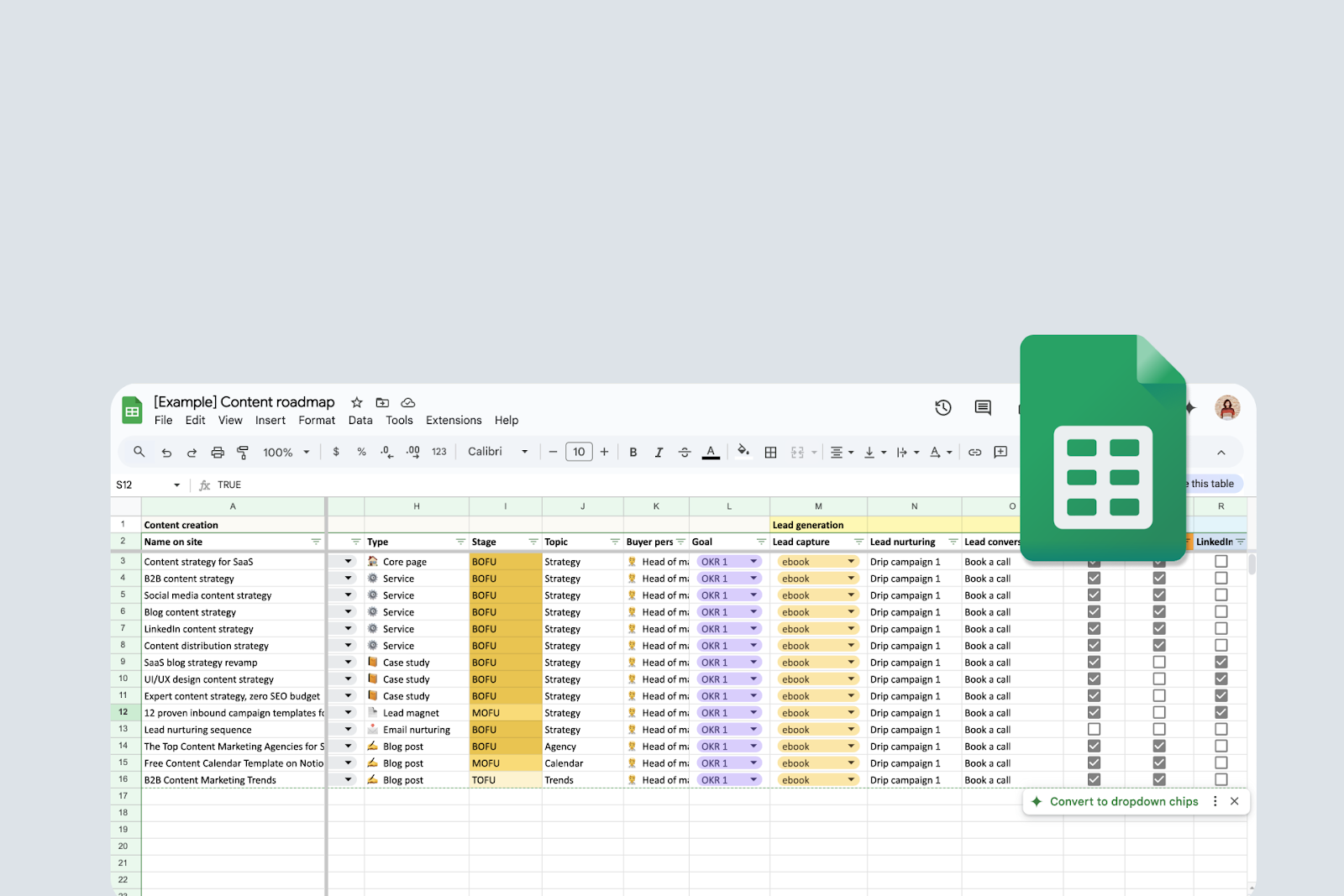
Now I do the full roadmap plus something bigger.
I include the company's positioning goals and POV. Because ranking and converting aren't enough anymore. You also need to build authority. You need to become top of mind.
That's what gets me excited now: figuring out how clients can build authority through content, not just produce it.
Our Context Engine framework changed how I approach strategy. So did our positioning projects. The core idea is this: once you define a POV, your entire content strategy changes.
A POV shifts your content from educating prospective clients to changing how they think about your category. Or their industry. It's where the differentiation lies. If you do it well, you stop competing for positions or AI mentions and become the first thing that comes to mind when clients need something done.
When you figure out your POV, your content is no longer a list of “how-to” guides and “what is X” articles. It's a body of work that represents how you see the world, and how that perspective connects to your client's problems.
Let me show you what that looks like.
_____________
TAKE THE SURVEY: We're building a report about how AI changed things in the content and SEO corner. If you're a CMO, Head of Content, Content Lead, or work closely with content operations, could you please share your answer in this short form? It takes only 2 minutes.
_____________
They educate.
Pass knowledge. Share advice. Describe theory, while trying to sound smart. They list what they did at the bottom of the funnel and push to convert at the end of the page.
That's the default. And plenty of companies have grown with it. But it's also what everyone else is doing, which means nobody is standing out.
It takes a position.
Addresses client problems. Shows proof, while trying to sound clear, not clever. Teaches readers how you think, not just what you know. And invites, rather than demands, the next step.
Passing knowledge: What is AI search optimization and why it matters?
Reframing the problem your reader has: Why you keep losing organic traffic, and what to do instead
Sharing generic advice: 5 ways to improve your content brief
Understanding what your client is going through: Your writers keep missing the point. The brief is why
Describing theory: Pixar's 22 rules of storytelling are a treasure. You should use them.
Showing proof: I applied Pixar's storytelling rule #7 to a client demo. Close rate went up 20%.
Trying to sound clever: We architect data-informed content ecosystems aligned with business growth trajectories.
Trying to sound clear: We build content strategies that make you the obvious choice in your category.
Listing what you did: We wrote 150 content pieces this month.
Educating how you think: Here's how we design TOFU content that builds authority
Pushing to convert: Book a call.
Inviting the next step: If you’re a design agency and need a content strategy, send us an email and we'll show you how we approached POV-led content for other agencies in your space.
Most B2B companies produce content the same way for years. Topics from a keyword tool. Briefs from a template. Posts that get published and forgotten.
The content is fine but nobody remembers neither what you said, nor who said that.
A POV changes that. Your clients start seeing you as the company that thinks about their industry differently than anyone else. They are recognizing your thinking, and your brand name.
Your writers stop asking "what should we talk about here?" because the POV gives them the answer.
That's the piece most content strategies are missing. And right now, it's the most interesting problem to solve.
If you want to start building your strategy the way I do it, here is a template that might help.
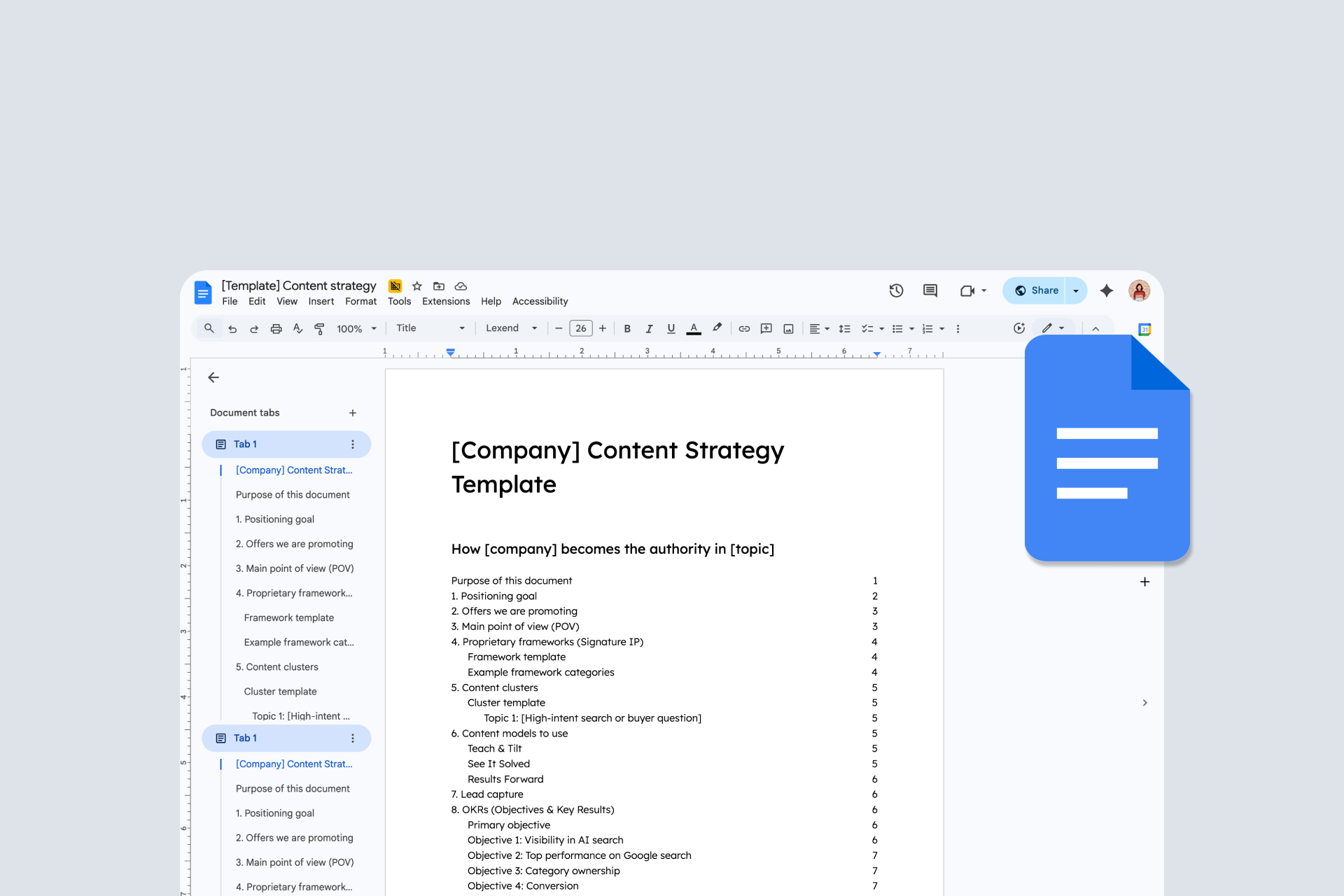
Please fill in our survey to help us shape the report about how AI changed things in content teams. I'll share the results as soon as we're done with it.
Kateryna
P.S. If we aren't connected already, follow me on LinkedIn and Instagram. If you like this newsletter, please refer your friends.
P.P.S. Need help with quality content? Zmistify your content with Zmist & Copy


Your words need to do more than inform. They must persuade. And for that, you need to build compelling arguments. Read on to learn how to make your content unbeatable.

Should you copy HubSpot and write about everything? I don’t think so.
Subscribe to From Reads to Leads for real-life stories, marketing wisdom, and career advice delivered to your inbox every Friday.


