

My content strategy is a Google doc with a headline "How X becomes a definitive alternative to… or a go-to choice for...”
The first section is called "Positioning goal.” It tells you everything you need to plan meaningful content that does the job marketing is supposed to do: build the right perception in your audience’s minds.
"Positioning goal” is what you need to go from:
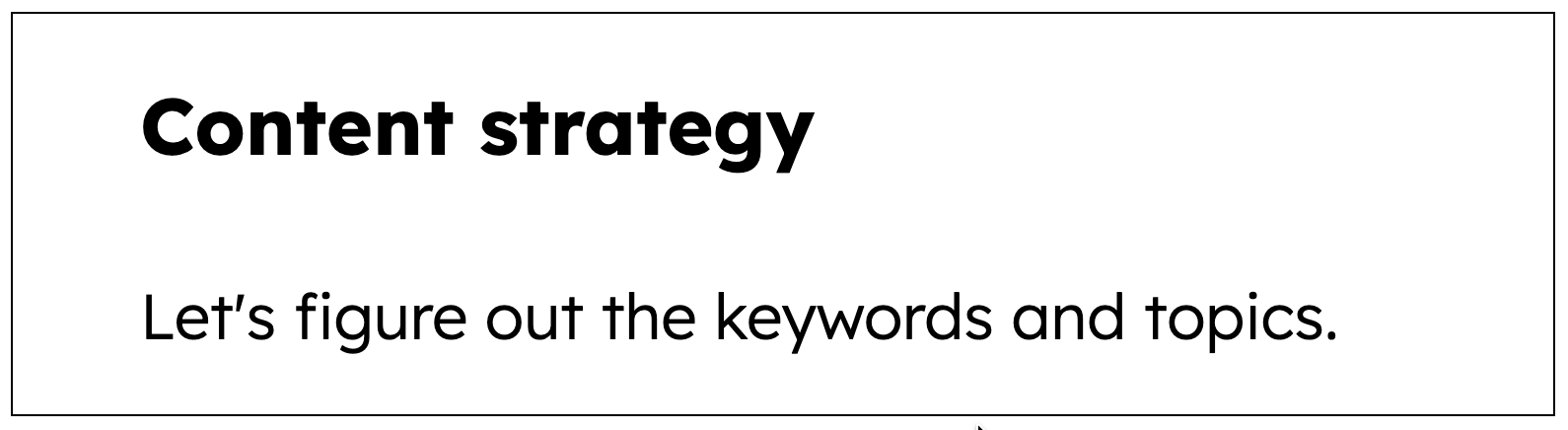
to:
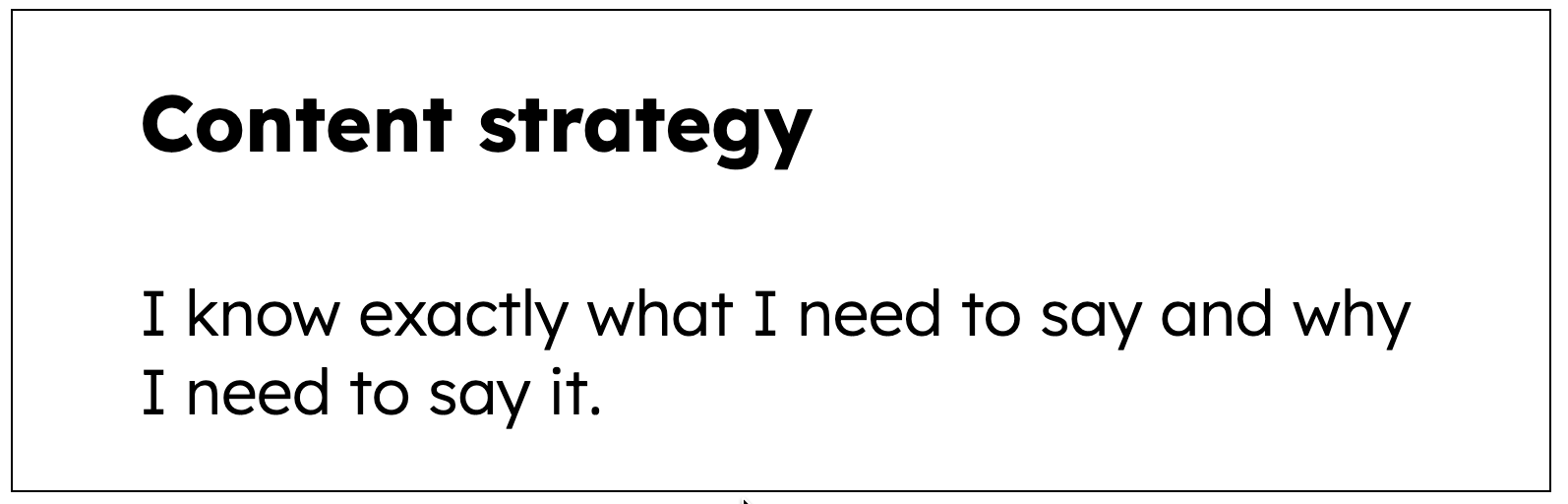
The rest of the strategy (and your content calendar) needs to support that goal.
In today's newsletter:
I often think how marketing is changing (even made a video for Instagram about that), but then there are things that don't. Ironically, the things that don't create the most difference.
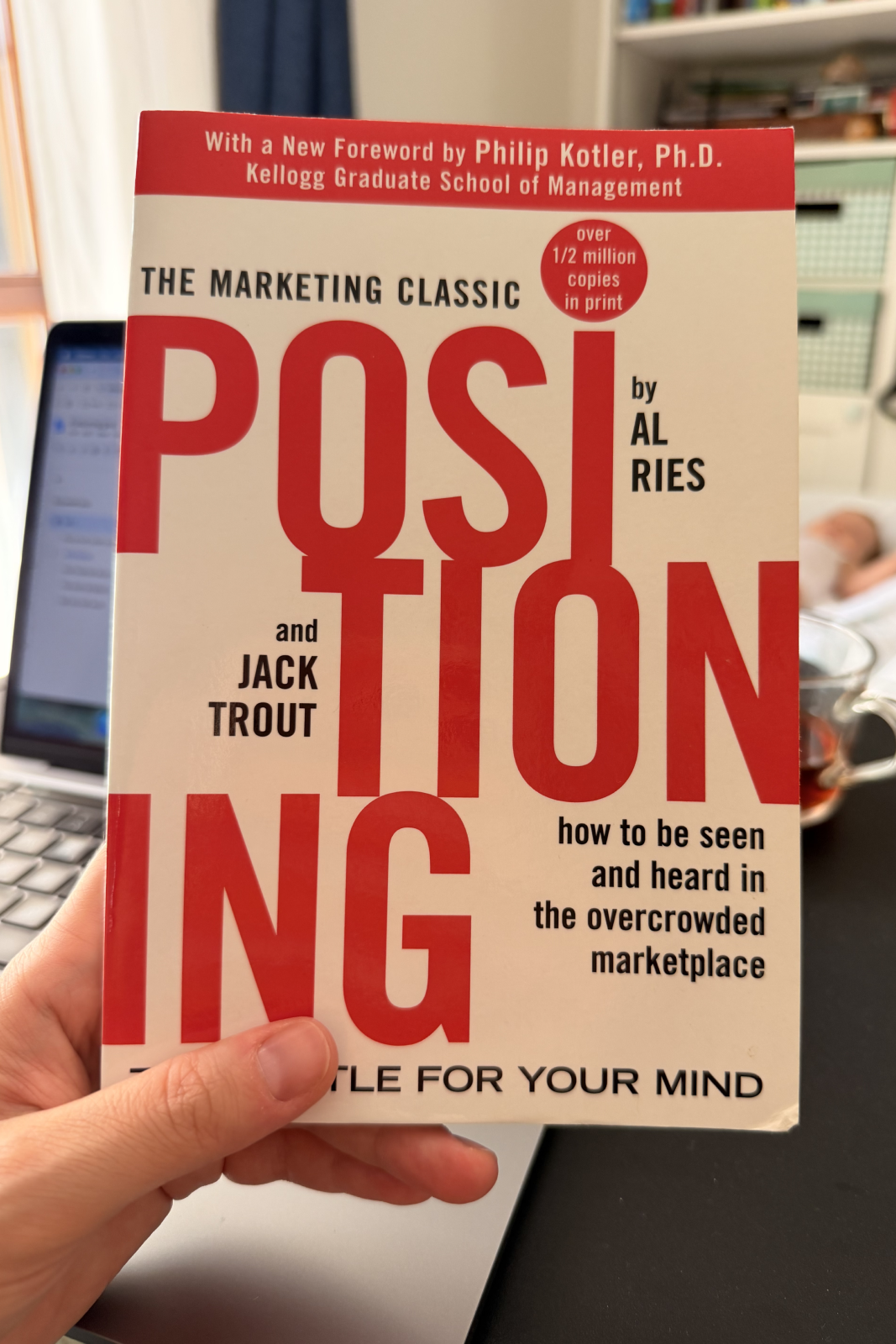
Al Ries and Jack Trout wrote the marketing classic “Positioning: The Battle for Your Mind” in 1980. "How to be seen and heard in the overcrowded marketplace,” says the cover. If the marketplace was overcrowded then, imagine now…
We now have AEO playbooks, AI-generated thought leadership, copywriting frameworks, and an endless supply of ways to publish more.
But none of them answers the question “Why should anyone remember you?”
Your AEO strategy and SEO best practices won't make much difference if your brand has nothing distinctive to say, or if your audience can't understand how you're different.
Positioning starts with the product, but it lives in the mind of the prospect. That's where the battle still happens.
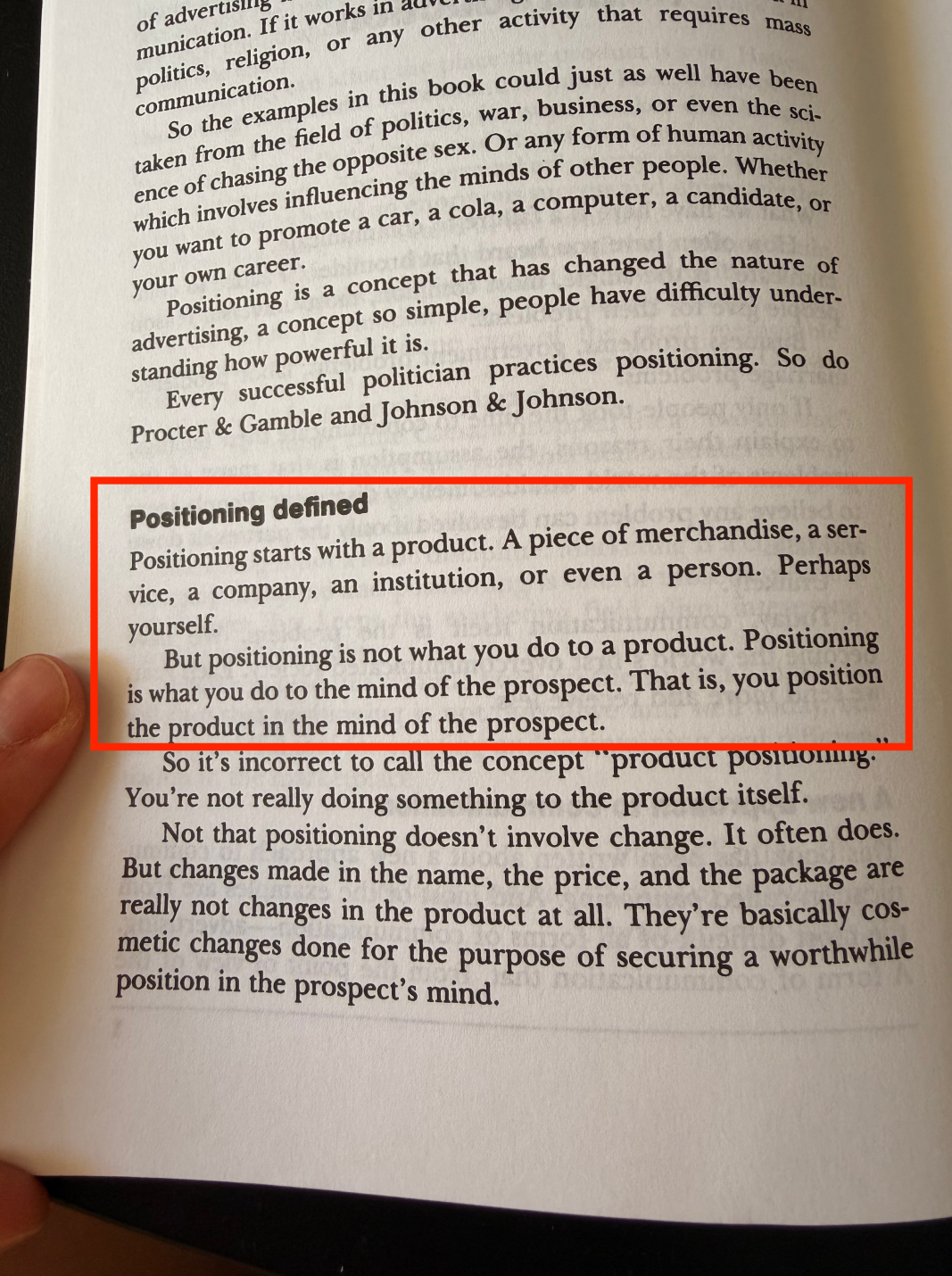
“Positioning goal” is the first heading in our content strategies. Before we think about keywords, topics, formats, or distribution, we define the perception we're trying to create.
What do we want people to remember about this company? What do we want them to associate it with? And ultimately, what needs to be true in their minds for them to choose it?
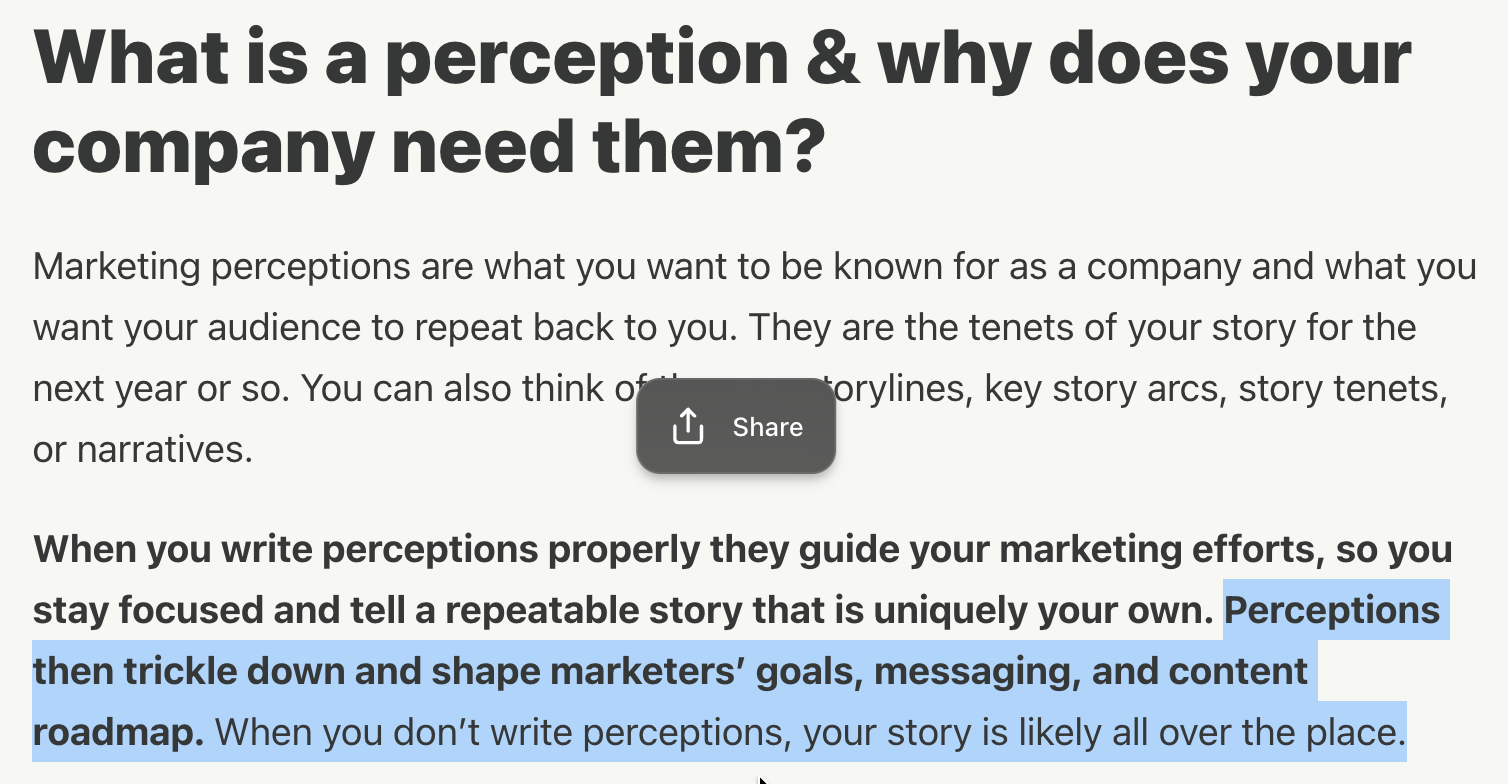
Years ago I read a piece by Emily Kramer of MKT1 about an exercise she calls perceptions. Perceptions are specific narratives that define what you want to be known for as a company.
In her piece, Emily makes a hypothetic example of perceptions Asana could've had when they were starting out:
“This is it. This is what I was missing,” went through my mind as I was reading Emily's article.
From then on, I started incorporating "perceptions” into our content. Later, they became one of the outputs of our Positioning service and the very first section in our content strategies (which we call “positioning goal”).
If you start with perceptions, it changes how you approach your strategy. Instead of asking “What should we create content about?” you ask "What do we need our audience to know about us?”
Once you know that, content becomes much easier to plan. You can work backwards from the perception you want to create and decide what needs to be said, proved, demonstrated, or challenged to get there.
Here is how I describe a positioning goal.
At the top of every strategy, I write:
Positioning goal
Position [Company] as [desired perception]. The strategy does this by focusing the content on:
This is how [Company] becomes the default reference for customers evaluating:
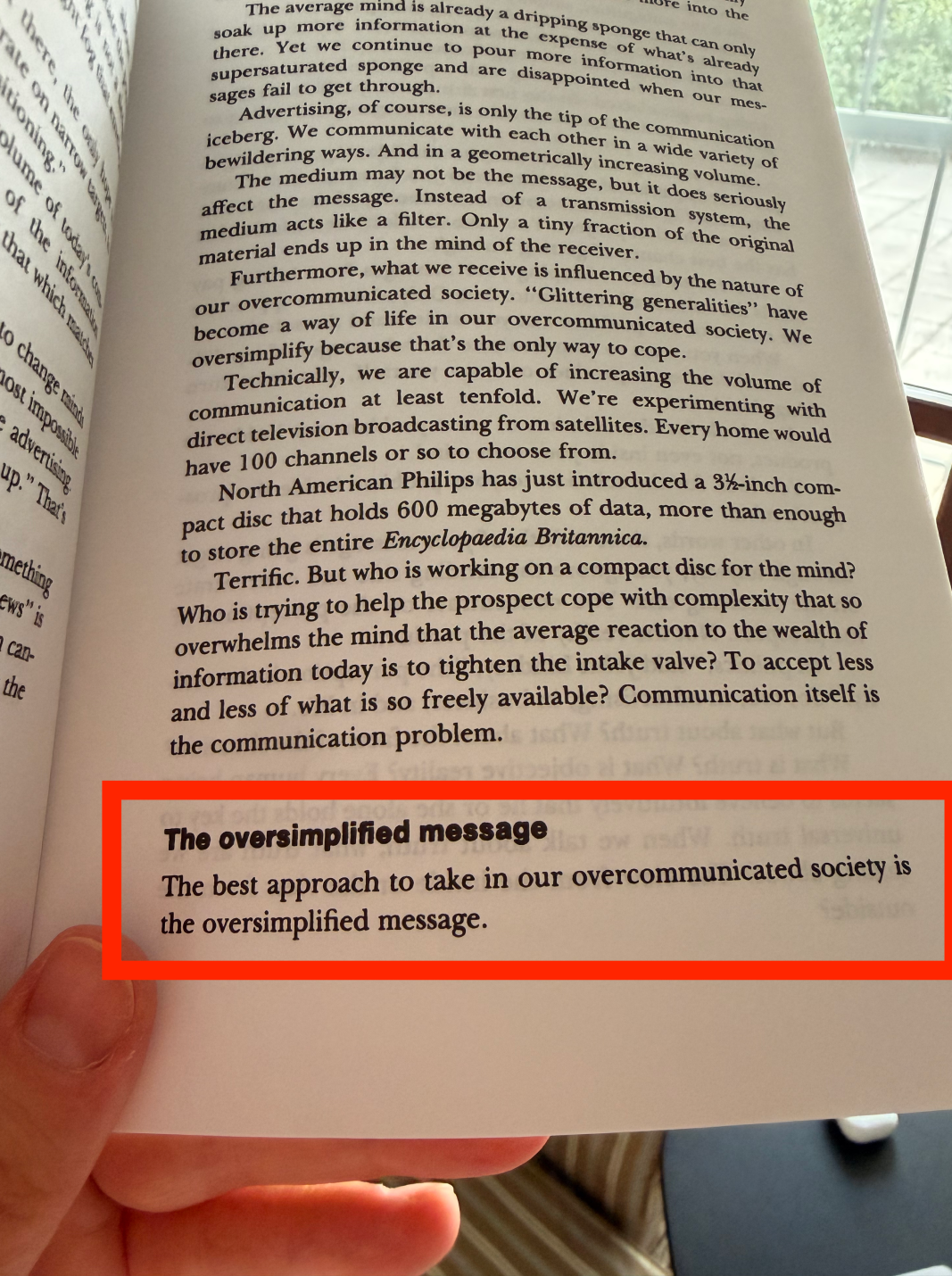
Keep it simple. Jack Trout agrees.
Citely is a fictional AI search visibility tracker for B2B marketing teams (tells you whether your brand shows up when buyers ask ChatGPT, Perplexity, or Gemini).
Positioning goal
Position Citely as the tool that turns AI search into a channel marketing teams can manage. The strategy does this by focusing the content on:
This is how Citely becomes the default reference for customers evaluating:
Every piece you decide to put on your content plan has to prove one attribute and push toward one evaluation moment. If it does neither, it's out.
Here are some examples of how this plays out across the funnel:
1. TOFU. Point of view. “AI search is becoming a marketing channel. Here’s what changes when you treat it like one”
Proves marketing-owned. It gives the category a new frame so people start associating AI search with the marketing team rather than the SEO team.
2. MOFU. Practical guide. "We were invisible in ChatGPT. Here are 4 changes that got us cited"
Proves actionable. It takes a problem the audience recognizes and shows that AI visibility isn't something you simply watch. There are concrete things you can do about it.
3. BOFU. Case study. “#1 AI visibility across 300 prompts. How a solo content leader outranked 2X larger competitors”
Proves measurable and actionable. There were competitors, something was done, and the result can be observed.
4. Lead capture. Data report. “What makes a B2B brand visible in AI search? We analyzed 10,000 AI answers to find out”
Proves measurable by turning an abstract concept into something that can be benchmarked, analyzed, and improved.
5. Lead nurture. Newsletter. “Someone is deciding what your brand is known for. It might be ChatGPT”
Proves marketing-owned by connecting AI visibility to positioning, rather than treating it as an SEO problem.
Good. Now let's look at the opposite. Here are some content ideas that shall not pass.
“10 AI SEO trends to watch in 2027” It doesn't build any of the three perceptions.
“What is AI search optimization? A complete guide” It puts Citely into the SEO/GEO bucket the positioning is trying to move beyond.
“AI search glossary: 50 terms every marketer should know” Useful for education and search traffic, but doesn't create a distinctive association with Citely.
These content ideas don't make the audience think “AI search is measurable,” “I can do something about my visibility,” or “this belongs to marketing.” In other words, they're not helping Citely build specific perceptions in the mind of the audience.
Remember,
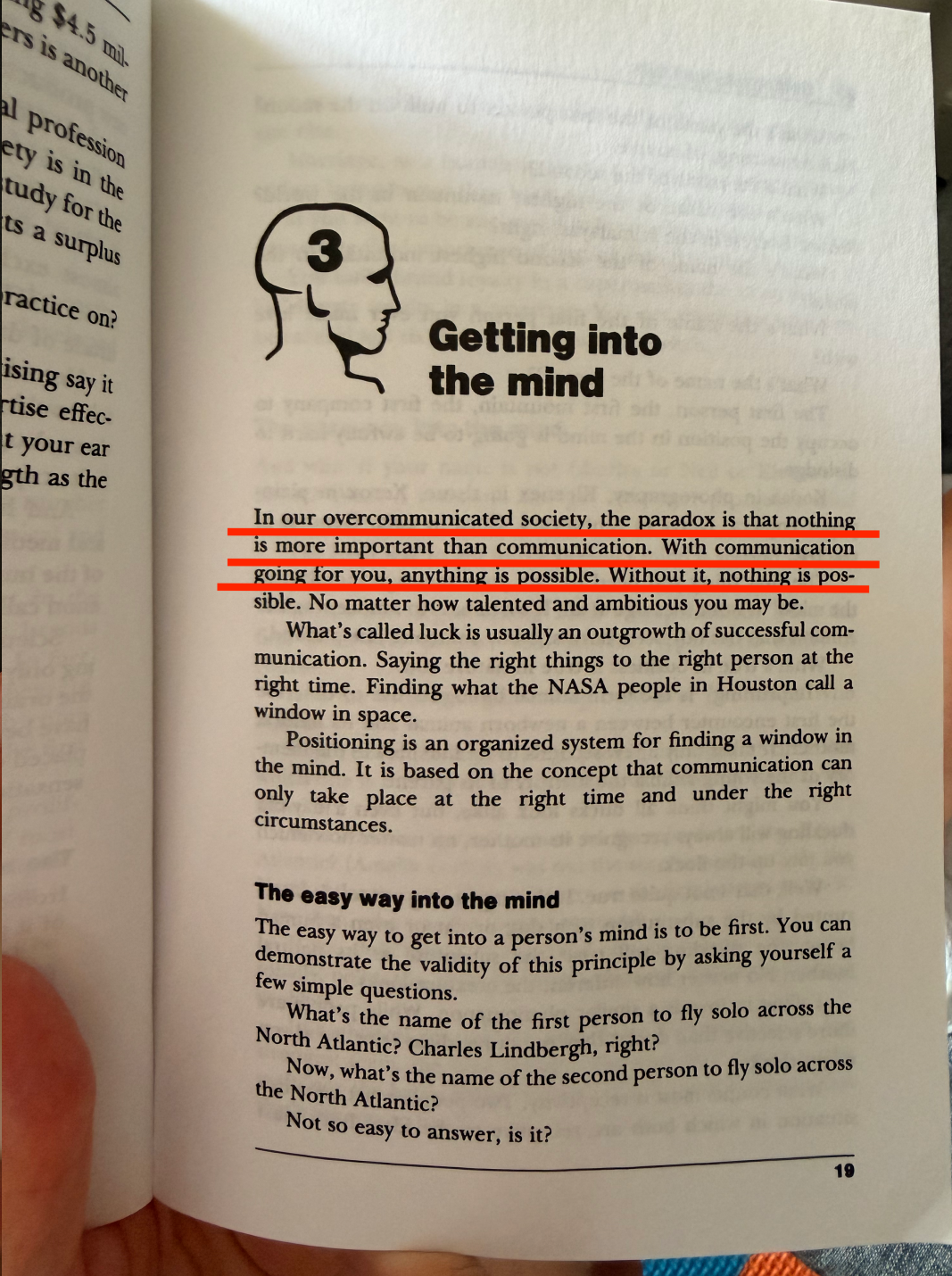
“In our overcommunicated society, the paradox is that nothing is more important than communication. With communication going for you, anything is possible. Without it, nothing is possible.”
Go write down your perceptions now.
Want my full content strategy template? Grab it right here.
I started working out after months of pregnancy and post-partum. I have a toddler, a baby, a husband, a business, and now this. Parkinson's Law states that work contracts to fit the time you give it. Keeps me amazed how come.
Kateryna
P.S. If we aren't connected already, follow me on LinkedIn and Instagram. If you like this newsletter, please refer a friend.
P.P.S. Positioning is one of the things we do at Zmist & Copy. If you can't say, in one sentence, how you want to be seen by the end of the year, that's where we start.


Wonder what copywriting is? What do copywriters do? How do they get paid? How do you become a copywriter? Is it a good career? Get all the answers about copywriting in this article.
“We try harder” is a great marketing slogan. It’s just not a great differentiation.
Subscribe to From Reads to Leads for real-life stories, marketing wisdom, and career advice delivered to your inbox every Friday.


