

Did you know that before building the Starbucks empire, Howard Schultz launched a coffee shop inspired by Italian bars? Il Giornale, launched in 1983, looked and worked exactly like an Italian coffee bar. It had neither menus, nor tables (until Schultz figured Americans didn’t quite buy into the whole experience and had to do some changes).
One of the first things that struck me about Italy when I moved here was how people drank coffee at the bar, standing at the counter. Made me realize I was somewhere different.
Anyway, why am I talking about espresso?
I’ve just launched a new format called Al Banco which is an Italian phrase for having your espresso standing at the bar. Only, instead of drinking coffee, I stand (quite literally) with a startup founder to talk about their product, then compare how they explain it in a conversation with how they talk about it on their website homepage.
The hypothesis I want to test is that founders are better at explaining their products than their homepages are. But somehow, a lot of that gets lost when they have to squeeze it into a headline and a few lines of copy.
My first Al Banco episode proves this hypothesis. This newsletter is about that.
In today's newsletter:
My first Al Banco guest is Matteo Forte, co-founder and CEO of SWITCH, the company behind Myles, based in…you guessed it…Italy.
Matteo runs a platform used by companies that manage shared scooters, bikes, and cars in cities. They already have customers, but only recently introduced an AI agent called Myles, that helps urban micromobility operators make better decisions about their fleets, such as where to position vehicles, how to forecast demand, and how to plan operations.
We spent 30 minutes discussing Myles with Matteo and concluded that its current homepage is too abstract and doesn’t explain what the platform actually does. At the end of our conversation, I drafted several options for the new homepage hero copy.
Here are some takeaways. If you want to watch the full episode, check it out on YouTube.
The current Myles homepage has an abstract message: Myles knows the where and the when. Even though there is an eyebrow explaining that it's an “AI teammate for fleet and logistics operators,” unless you are a person who knows what Myles does exactly, it's really hard to get your head around what "where" and "when" even mean.
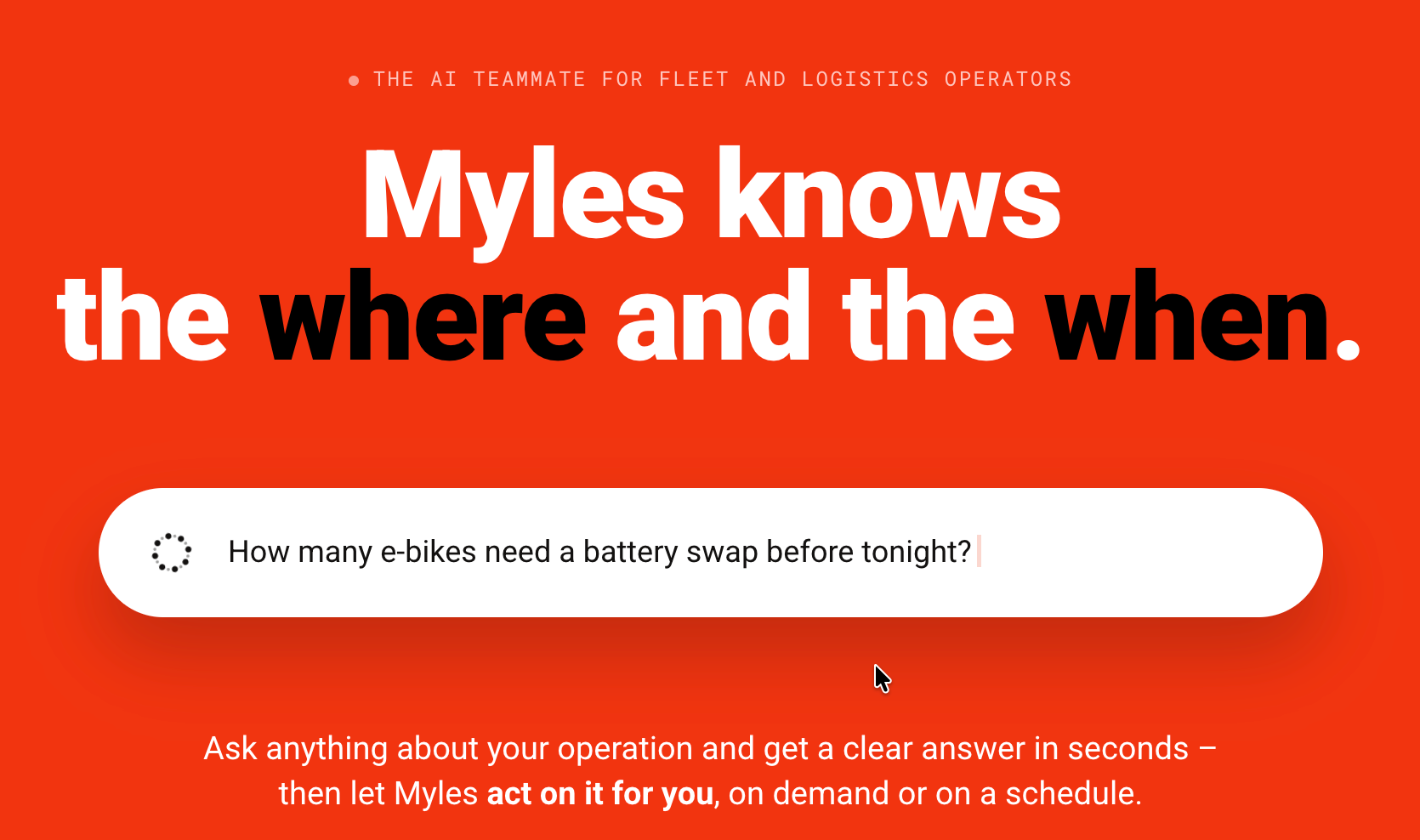
The hero of the Myles homepage includes an interactive bar that shows the questions you can ask Myles, giving you an idea of what the thing is. This is sort of a product demo and I think it should stay in the hero, but the tagline still attracts the most attention. People look at the tagline more than they look at anything else on this page.
To find our way to a better message for the hero, I needed first to understand why people need Myles, so we started with an outcome.
Based on what I learned about Myles during our conversation, I offered the following message, which Matteo confirmed was the reason customers needed the tool:
Keep more vehicles in use.
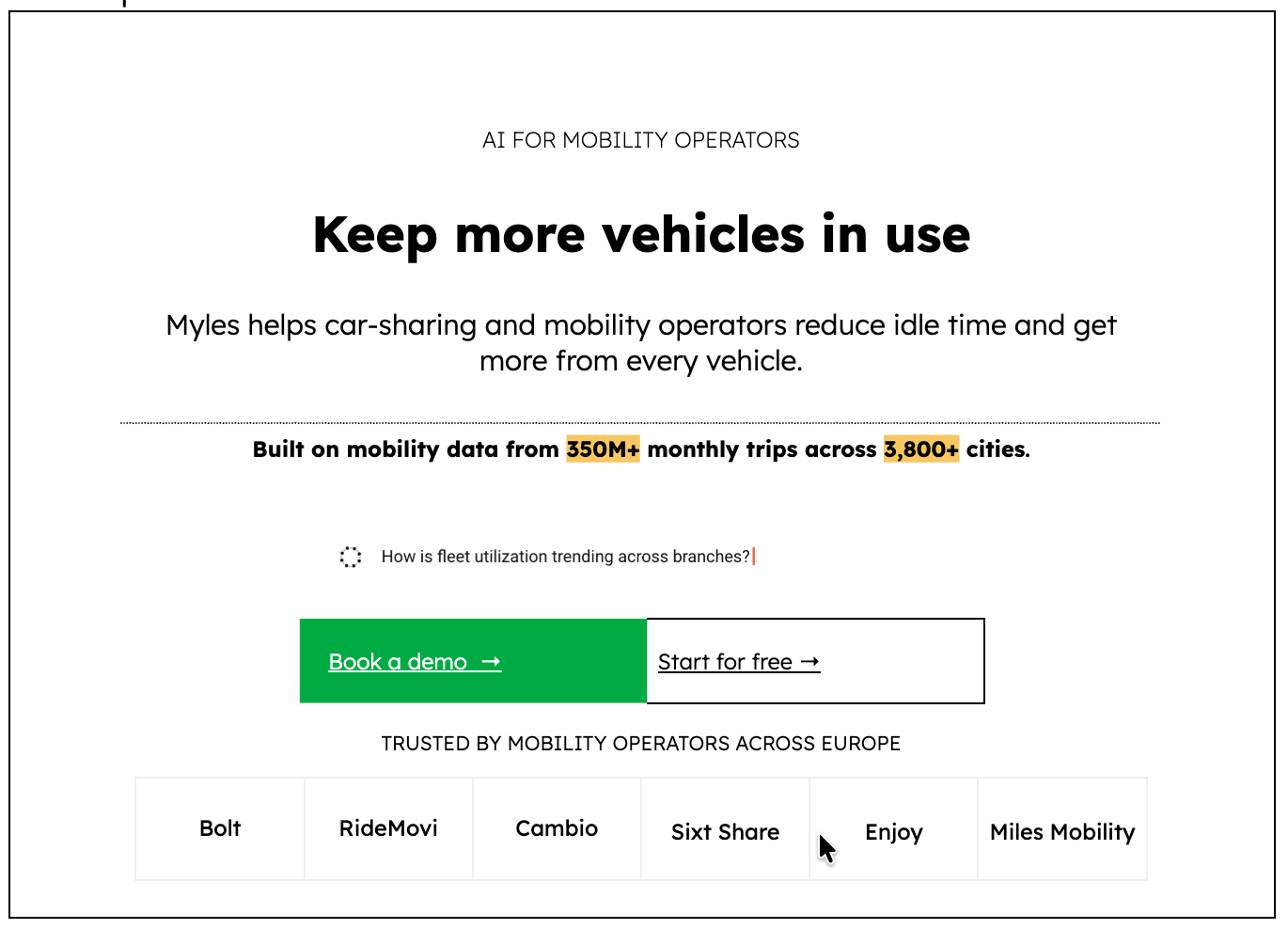
It's clear. But here's the catch: fleet management products can make the same promise, even when their core functionality is maintenance or something else. The message communicates the desired outcome without explaining what Myles does or what makes it different.
A good tagline needs to do more than describe a benefit. It needs to give the right buyer a reason to believe that your product is the way to achieve it.
The takeaway: Define why your customers need your product, what core benefit they get from it.
If Myles helps urban mobility operators improve vehicle utilization by telling them where they should put their vehicles so people can rent them, I wonder how Myles knows where those vehicles need to be.
The answer to this question reveals what the product does and what makes it different.
Myles combines operational data from their customers’ fleet systems with contextual data about cities to predict demand and help operators decide where to position their vehicles. That mechanism is the product’s core value proposition.
So the message becomes: Know where your fleet needs to be next.
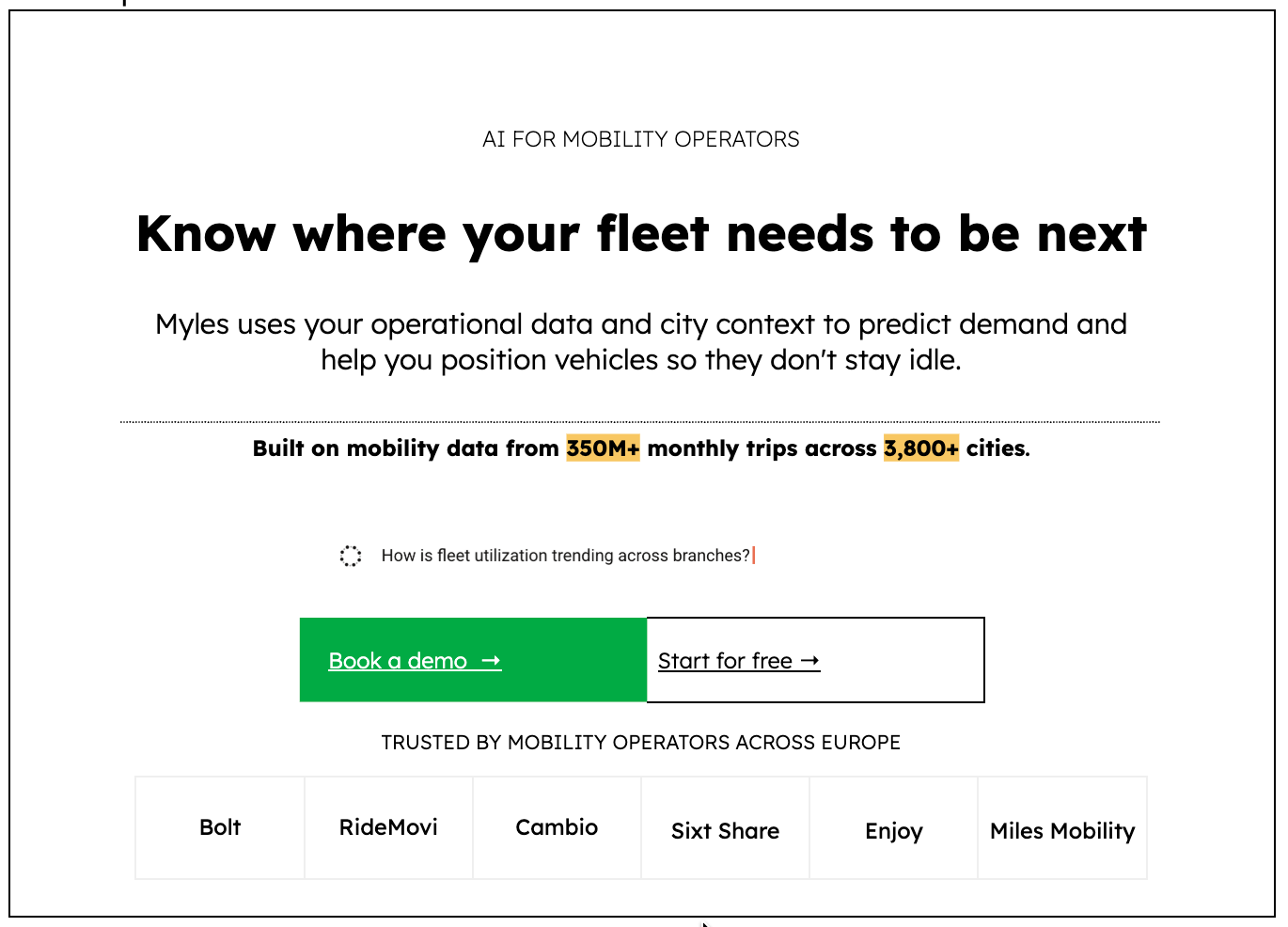
That's a much more specific story than simply promising better utilization.
The takeaway: Start with the outcome customers care about, but don't stop there. Explain how your product makes that outcome possible, especially when other companies promise the same thing.
This is a strategic choice. Focusing on one use case means leaving others out. But if that use case addresses the biggest challenge your ideal customers face, it may be worth making it the core of your messaging.
For Myles, that use case could be launching a vehicle-sharing operation in a new city. Myles could help operators forecast demand, identify promising locations, and plan their launch.
The message then becomes: Know how your service will perform in a new city.
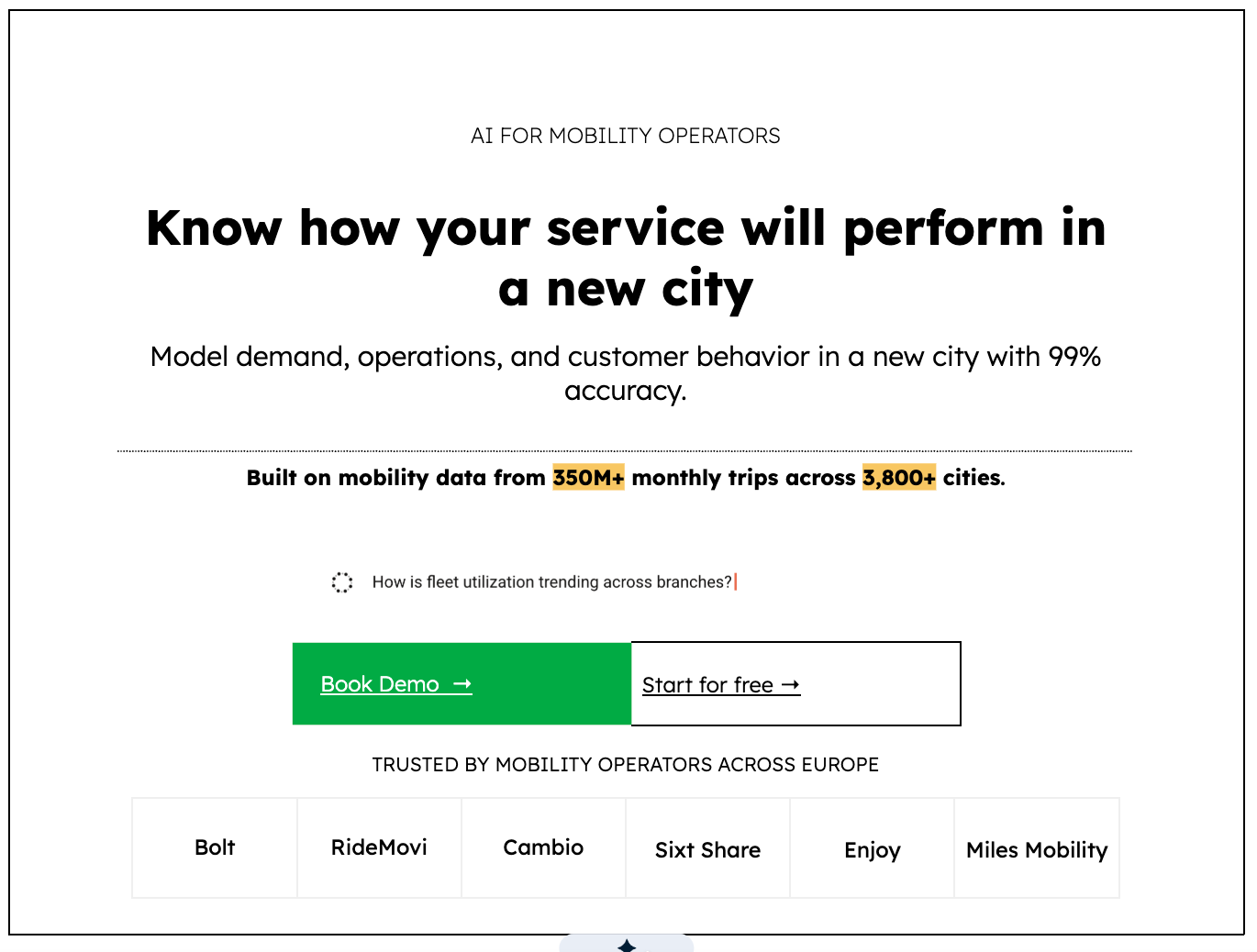
If Myles wants to cover a broader set of fleet operations, the message about knowing where vehicles need to be next leaves more room for other use cases. But if they're sure that scaling fleet operations to new cities is the biggest customer problem and the trigger that makes customers look for a solution, this message works even better.
The takeaway: Choose one strong entry point into your market. Use the rest of the homepage to show how that promise extends to other use cases.
During our Al Banco session, we explored other directions for Myles hero copy. I hope they will use those suggestions to decide what deserves to be said first and rework the rest of the homepage to support their positioning.
The decision about what to say in the hero requires you to understand which customers matter most, why they buy, what alternatives they consider, and what makes your product different.
Copywriting comes after that.
Want to see how we worked through it? Watch the first episode of Al Banco, where Matteo and I rethink the Myles homepage hero live: Watch the episode →
If you want me to roast your homepage hero, I am happy to do that for you. We can do it both publicly and privately. The private session is paid. Learn more here.
Kate
P.S. Rethinking your positioning? Get clear on who you serve, what you offer, and why you're the better choice → explore our Positioning service.
P.P.S. If we aren't connected already, follow me on LinkedIn and Instagram. If you like this newsletter, please refer your friends.


"Write about problems" - every copywriting tip ever. But nobody teaches you HOW.

Stories of well-known brands, Super Bowl commercials, works of fiction, plays, games, even paintings, and music—behind any good story is the same narrative structure that humans have been using since they became humans. Read on to learn how to apply the most popular story pattern to your content.
Subscribe to From Reads to Leads for real-life stories, marketing wisdom, and career advice delivered to your inbox every Friday.


